


How much do you know about the structure of milling cutters? It's all in the article!
Milling cutter is one of the commonly used machining tools. Today, let's learn about the structural knowledge of indexable milling cutters!
1.
Main geometric angles of indexable milling cutters
The milling cutter has one main deviation angle and two leading angles, one called axial leading angle and the other called radial leading angle.
Radial front angle γ F and axial front angle γ p. Radial front angle γ F mainly affects cutting power; Axis forward angle γ P affects the formation of chips and the direction of axial force, when γ When p is positive, the chips fly off the machining surface.
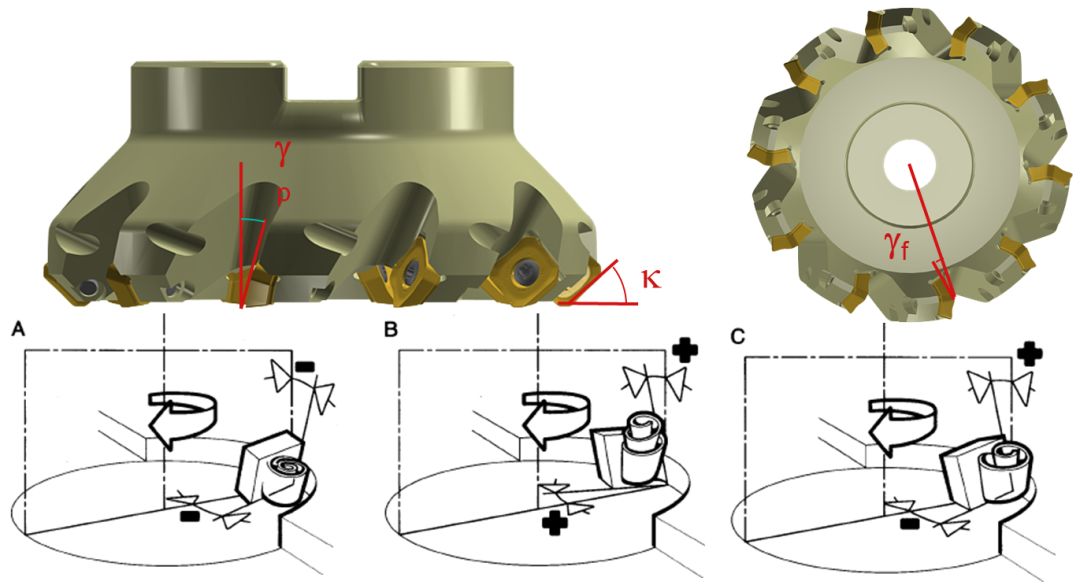
Front corner (front blade contact surface)
Negative front angle: used for steel, steel alloys, stainless steel, and cast iron.
Front corner: used for viscous materials and some high-temperature alloys.
Middle front corner: used for threading, grooving, profiling, and forming knives.
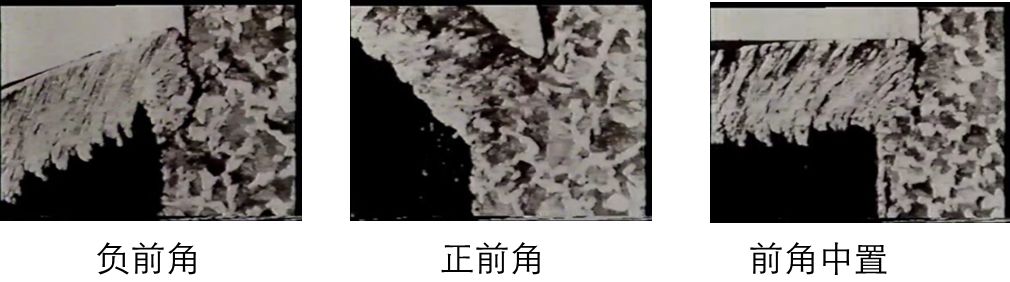
Use negative front corners as much as possible.
2.
Geometric shape of milling cutter
(1) Positive angle - Positive angle
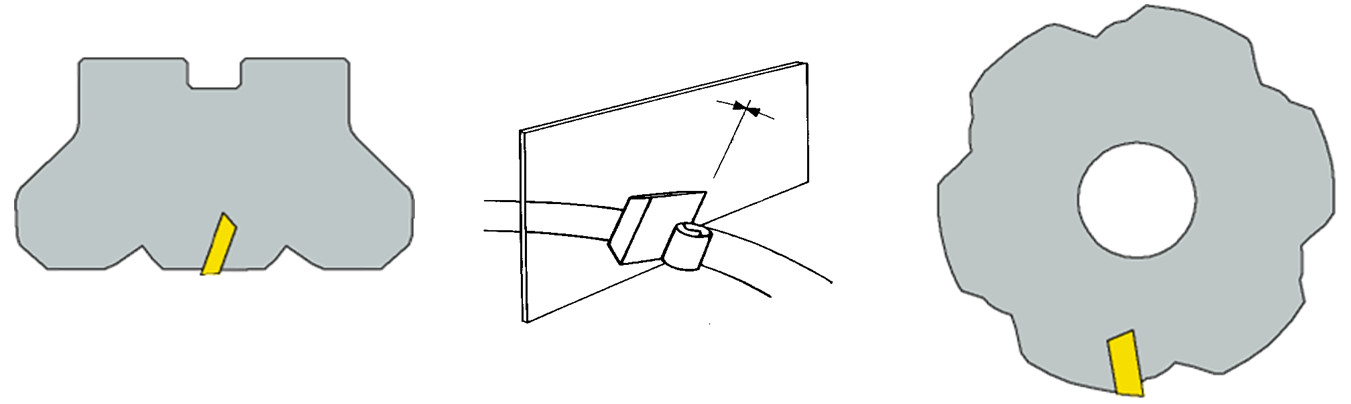
Cutting is light and fast, chip removal is smooth, but the cutting edge strength is poor. Suitable for processing soft materials and stainless steel, heat-resistant steel, ordinary steel, cast iron, etc. When using low-power machine tools, insufficient rigidity of process systems, and the formation of chip deposits, this form should be given priority.
Advantages:
1) Smooth cutting
2) Smooth chip removal
3) Good surface roughness
Disadvantages:
1) Cutting edge strength
2) Not conducive to entry and contact
3) The workpiece is detached from the machine tool workbench
(2) Negative angle - Negative angle
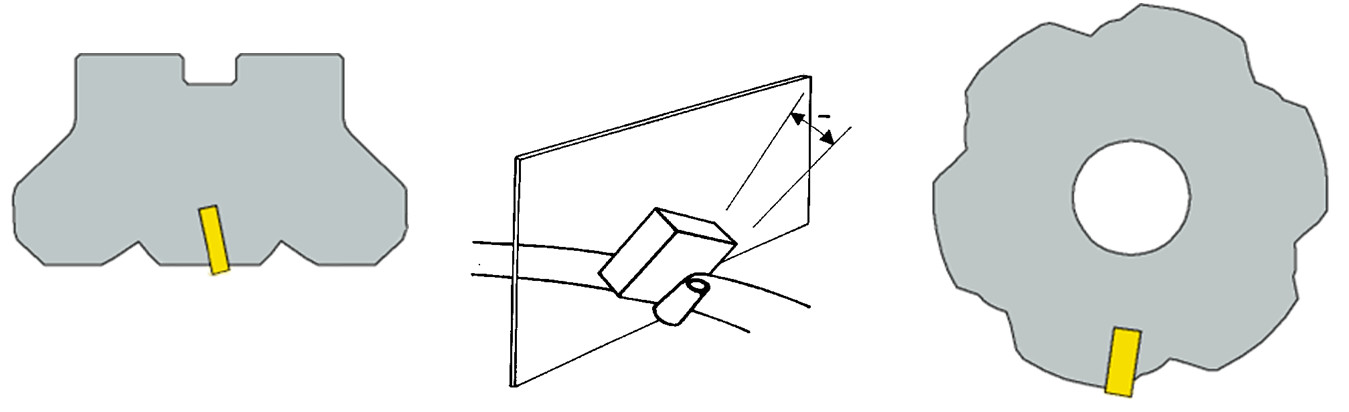
Strong impact resistance, using negative blades, suitable for rough milling of cast steel, cast iron, and high hardness and high-strength steel.
But milling consumes a lot of power and requires excellent process system rigidity.
Advantages:
1) Cutting edge strength
2) Productivity
3) Push the workpiece towards the machine tool workbench
Disadvantages:
1) Greater cutting force
2) Chip blockage
(3) Positive negative angle

The cutting edge has strong impact resistance and is also sharp. Suitable for processing steel, cast steel, and cast iron. When there is a large amount of milling, the effect is also better.
Advantages:
1) Smooth chip removal
2) Beneficial cutting force
3) Wide application range
three
Milling cutter pitch
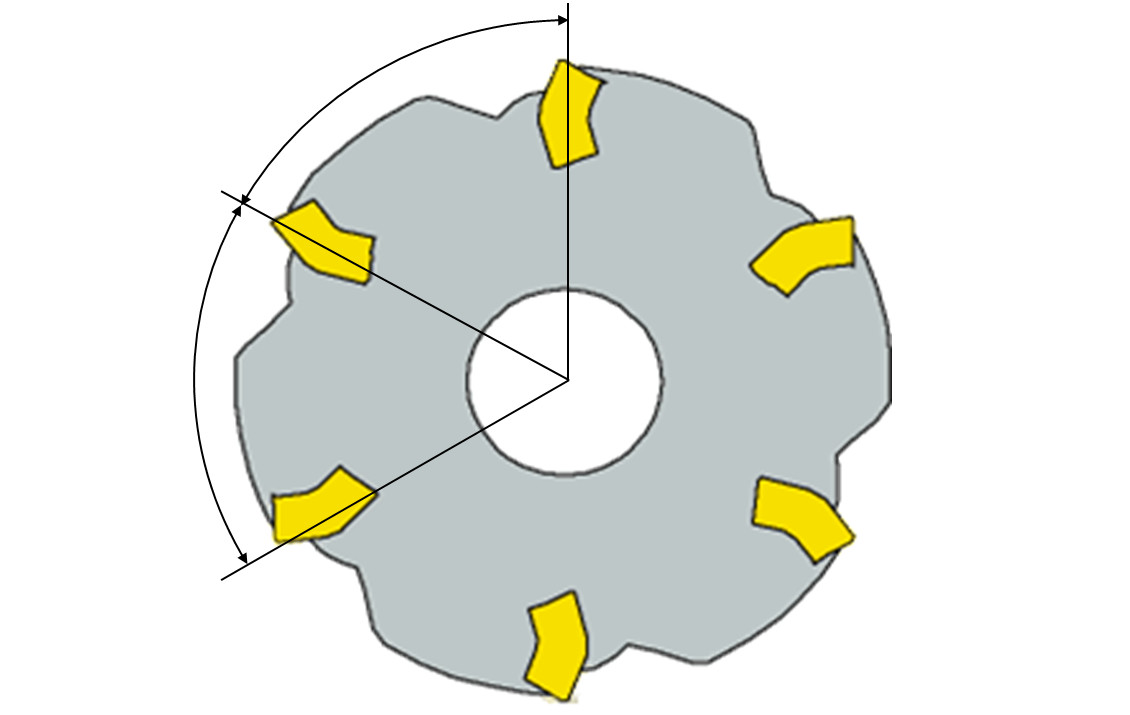

1) Dense teeth: High speed feed, high milling force, and small chip space.
2) Standard teeth: conventional feed rate, milling force, and chip space.
3) Sparse teeth: Low speed feed, low milling force, and large chip space.
If the milling cutter is not equipped with a dedicated polishing blade, the surface roughness depends on whether the feed rate per revolution exceeds the width of the blade polishing blade plane.
Example: Slot milling&contour milling
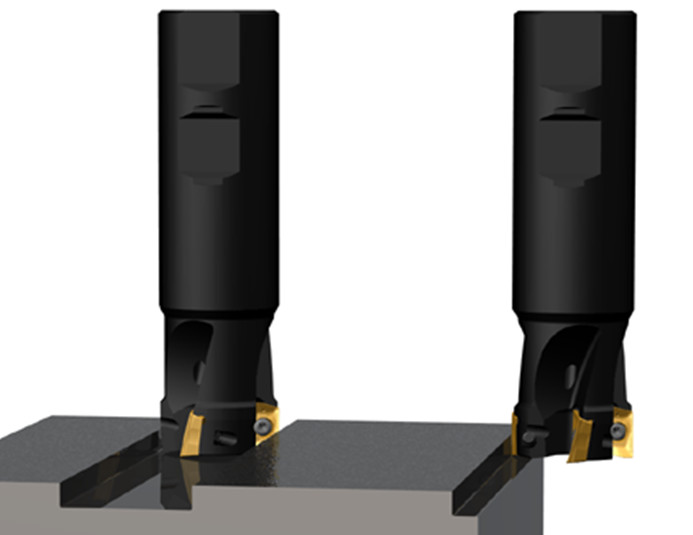
Number of teeth:
1) Sparse or standard teeth for milling grooves (safety)
2) Dense teeth for contour milling (productivity)


