Detailed explanation of intelligent manufacturing production lines
Automatic production lines are gradually developed on the basis of assembly lines. They are a production system that connects a group of CNC machine tools and auxiliary equipment according to the process sequence through the workpiece conveying system and control system, and automatically completes all or part of the product manufacturing process. In the entire automated production line, its specific composition includes a total of 13 parts, mainly including various functional sites, different functional modules, sensors, solenoid valves, and import and export interfaces. Among them, functional sites mainly include material stations, processing stations, assembly and handling stations, and finished product sorting stations; Among various modules, there are a total of 5 types, namely frequency converter module, power module, PLC module and button module, and motor drive module. On the basis of integrating these parts, automated production lines can not only achieve loading and unloading and processing, but also complete assembly, sorting, and conveying related content.
As single machine products, intelligent lathes and turning centers can meet the production and manufacturing of general small and simple parts. However, with the transformation and upgrading of industrial production modes to automation and flexibility, traditional assembly line operations can no longer meet the existing production requirements of high precision, high efficiency, and high flexibility. Therefore, intelligent turning production lines based on intelligent robots, intelligent lathes, and intelligent turning centers have developed, It will become the main development direction of production automation. The intelligent turning production line involves equipment such as production line control, quality inspection, handling robots, machining machines, logistics transportation lines, production management, and finished product warehousing. Each equipment is an important component of the intelligent turning production line. Through further system integration, multiple intelligent production lines will be able to form digital workshops and digital factories, achieving automation and intelligence of the entire factory.
1 Overall layout of intelligent production lines
Figure 1 shows a typical intelligent turning production line, which mainly completes the mixed automatic processing and production of parts from rough to finished products. The turning production line consists of a production line control system, an online detection unit, an industrial robot unit, a machining machine unit, a raw material storage unit, a finished product storage unit, and an RGV car logistics unit. The processing equipment adopts the CK series intelligent machine tool produced by Shaanxi Baoji Machine Tool Group Co., Ltd., which is equipped with the Baoji B80 intelligent CNC system.

Figure 1 Intelligent Turning Production Line [1]
1) Main control system and detection unit
Figure 2 shows a typical control system designed by Shaanxi Baoji Machine Tool Group Co., Ltd., consisting of indoor terminals and on-site terminals. The indoor terminal is equipped with multiple displays and databases, which are responsible for receiving manufacturing and production big data transmitted from the entire production workshop. The displays are used to display various statuses on the user workshop site, including equipment operation status, part processing status, logistics situation, personnel status, and environmental information such as temperature and humidity on the user workshop site. Senior management personnel can easily access the indoor terminal Visually and clearly view the various conditions on site. In the user's production workshop, on-site terminals are equipped to control the on-site operation of the entire production line, complete the collection, analysis, local and remote management of equipment basic data, dynamic information visualization and other operations. The on-site terminal is equipped with a display, which can clearly and conveniently view the various statuses of the user's workshop, including equipment monitoring, production statistics, fault statistics, equipment distribution, alarm analysis, process knowledge base, etc. The on-site terminal can add production management dashboards, upload and download processing programs, identify personnel by swiping cards, and perform progress statistics and analysis of production tasks. It can collect and transmit on-site data through various access methods such as wired, Wi Fi, 2G/3G/4G/5G, etc. The collected manufacturing big data can be transmitted to the SQLServer database of the user's indoor terminal through the Internet, Interacting data with indoor terminals through terminal computers.
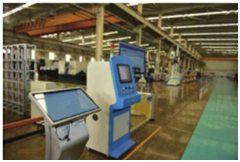
Figure 2 General Control System [2]
Figure 3 shows a typical online detection unit, consisting of industrial robots, end effectors, and multi-source sensors. After the logistics system transports the finished products to the designated location, the industrial robot moves the entire detection unit to the designated workstation, and uses a visual camera to take photos, recognize and locate the parts to be tested. The industrial robot adjusts its position again to align the entire detection unit with the part to be tested.
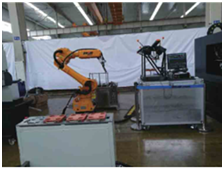
Figure 3 Online detection unit
After the recognition and positioning are completed, the end effector is responsible for grasping the parts to be tested. The parts are transferred to the designated position on the testing platform through an industrial robot. The accuracy indicators of the parts to be tested, such as aperture, depth, curvature, roughness, and flatness, are detected online by multi-source sensors pre equipped on the testing platform. Intelligent algorithms can also be used to automatically measure and classify the parts, Transfer different types of components to different logistics lines and complete automatic part classification operations. The detection unit can return the detection results to the main control system through the Internet, and the operator can directly view the detection results of the parts through the terminal computer and display of the indoor or on-site main control system. If it meets the detection requirements, it can directly proceed to the next workstation operation. If it does not meet the requirements, a non conformity reminder will be displayed on the display, and the operator will make judgments and decisions based on the degree of non conformity of the parts. After the detection is completed, the end effector grabs the detected parts, and the industrial robot transfers the detected parts to the logistics system, which then transports them to the next workstation for processing.
2) Industrial robots and turning machine units
The processing module designed and manufactured by Shaanxi Baoji Machine Tool Group Co., Ltd. is shown in Figure 4, which consists of two parts: industrial robots and turning machines. Among them, industrial robots are responsible for the movement and grabbing of the parts to be processed, and turning machines are intelligent machines that can ensure high precision and processing efficiency.
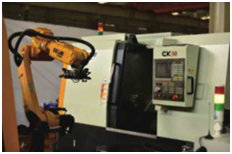
Figure 4 Processing module
After the logistics distribution system transports the raw or semi-finished parts to the designated workstation, the industrial robot grabs the raw or semi-finished parts and places them into the intelligent turning machine to assist the machine in completing the clamping work of the parts to be processed. For dual station turning machines, after one intelligent lathe completes the turning work, the industrial robot transfers the semi-finished parts to another intelligent lathe to complete the processing of the next station. After all processing work is completed, the industrial robot will grab and transfer the finished parts to the logistics system, which will then transfer the parts to the next workstation.
The turning machine is equipped with intelligent health protection function, thermal temperature compensation function, intelligent tool breakage detection function, intelligent process parameter optimization function, expert diagnosis function, spindle dynamic balance analysis and intelligent health management function, spindle vibration active avoidance function, and intelligent cloud butler function [3]. The main function of intelligent machine tools is to cooperate with industrial robots to complete different stages of processing and production tasks, while ensuring the efficiency and accuracy of part processing and production. Users can replace intelligent machine tools with different grades of machine tools according to the needs of the production workshop, such as high-speed turning machines, precision turning machines, and machining centers. They can also add or reduce corresponding intelligent functions according to their own needs to form the most suitable turning production line for enterprise production needs.
3) Logistics and finished product warehousing unit
Figure 5 shows a typical logistics unit designed and produced by Shaanxi Baoji Machine Tool Group Co., Ltd. It consists of industrial robots, end effectors, RGV carts, part transportation fixtures, and walking tracks, mainly realizing the transfer and transportation of machine tool processed parts. In the user workshop, intelligent production lines can be equipped with single or multiple logistics production lines according to the needs of production tasks. Intelligent turning production lines with fewer machine tools or simpler processing tasks can adopt a single object streamline mode to complete operations such as loading, transferring, and unloading; In situations where there are many machine tool tasks or complex machining tasks, in order to avoid the complexity and conflict of logistics system tasks, two or more logistics lines can be equipped. One line is used for loading raw or semi-finished parts, one line is used for intermediate process transportation, and the other line is used for cutting finished parts. For intelligent turning production lines with relatively simple processing scenarios, industrial robots can be fixed and can complete the clamping and retrieval of parts; For more complex intelligent turning production lines, mobile robots can be separately equipped to distribute, grab, and release parts on the walking track. The transfer of parts between different workstations is completed by an RGV car. Through automatic programming, the RGV car can accurately reach the predetermined position within a specified time, ensuring that industrial robots can recognize and grasp parts smoothly. The RGV car is equipped with part shipping fixtures, and the user's workshop can equip different fixtures according to the size and size of the processed parts. After the fixture is filled with enough raw or finished parts at each position, the RGV car runs to complete the corresponding loading, transportation, and unloading work.
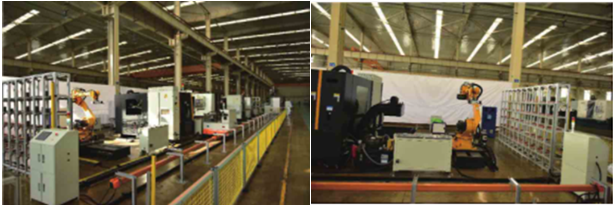
Figure 5 Logistics Unit Figure 6 Finished Product Storage Unit
Figure 6 shows a typical finished product storage unit designed and produced by Shaanxi Baoji Machine Tool Group Co., Ltd., consisting of a storage cabinet, industrial robots, end effectors, and walking tracks. After the parts are processed, the finished parts are transported to the cutting area by the RGV car, and the industrial robot moves to the cutting area. The end effector grasps the finished parts based on their numbers, and then the industrial robot transfers the finished parts to the designated location in the storage cabinet. The end effector requires special design by each user unit based on the shape and size of the processed parts to meet the gripping work of different parts. The storage cabinet is composed of independent small cabinets of the same size, which can be quickly assembled and disassembled between each cabinet. For fixed industrial robots, the user workshop should adjust the length and height of the designed storage cabinet according to the maximum working height and range of the industrial robot. Industrial robots equipped with walking tracks can be designed for longer finished product storage cabinets. Robots can increase their work coverage by walking on tracks, which can be set as straight or circular according to needs. For user workshops with multiple storage cabinets, or finished product storage cabinets with different part classifications, user units can also adjust the length and shape of the walking track. For example, a circular track can make one robot correspond to multiple finished product storage cabinets, achieving multiple services for one robot and improving robot utilization. When there are a large number of finished logistics storage cabinets, the length of the walking track should be increased, or two or more industrial robots should be equipped to ensure the efficiency of logistics. It should be noted that the design of the walking track length should consider the walking time of the robot and should not be designed too long. If the walking time of the robot is too long, it may lead to low logistics distribution efficiency, causing the accumulation of finished parts in the cutting area, resulting in accidents such as part collisions, which increases production risks and reduces work efficiency.
2 Control hierarchy of machine tool controllers
The combination of artificial intelligence and computer technology has greatly promoted the intelligence level of CNC systems, mainly reflected in various aspects of CNC systems:
(1) Intelligent application of feedforward control, online identification, and self-tuning of control parameters to improve driving performance;
(2) Utilizing adaptive control technology to achieve intelligent processing efficiency and quality;
(3) Applying intelligent technologies such as expert systems to achieve intelligent fault diagnosis, intelligent monitoring, and other aspects of machining process control.
During the manufacturing process, the control level of the machine tool controller can be divided into three levels as shown in Figure 7, including the motor control level, process control level, and supervisory control level. Among them, the motor control level can achieve position and speed monitoring of the machine tool through machine detection equipment such as gratings and pulse encoders; The process control hierarchy mainly includes monitoring the cutting force, cutting heat, tool wear, etc. during the machining process, and adjusting the machining process parameters; The supervision and control hierarchy takes the dimensional accuracy, surface roughness, and other parameters of the processed product as control objectives to improve the processing quality of the product.
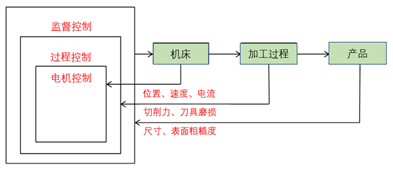
Figure 7 Control hierarchy of machine tool controller
1) The Development Trends of Intelligent Processing Control Abroad
(1) Research on Intelligent Control Strategy: In the field of neural network control machining, experts have proposed a particle swarm driven fish swarm search algorithm to optimize the machining parameters of CNC machine tools. A hybrid method based on neural networks and genetic algorithms is proposed to reduce the computational complexity and time consumption of neural networks, which requires process iteration and convergence due to the influence of network complexity. Simulation experiments are conducted on feature recognition in planar machining to demonstrate its feasibility. Someone has proposed a genetic algorithm based model suitable for solving small cutting force prediction, which can achieve prediction of cutting force and optimization of cutting parameters.
(2) Application of machining process monitoring: Monitor and monitor abnormal phenomena during the machining process, and then take measures to stop the machining process and adjust machining process parameters (such as spindle speed) to avoid machine tool damage. Abnormal phenomena during the machining process may occur gradually, such as tool wear; It may also occur suddenly, such as tool damage; Or it can be prevented, such as vibration or vibration.
2) Domestic development trend of intelligent machining control
Under intelligent control, automation systems can proactively troubleshoot faults, as they can effectively connect all machines through computer language during the application process and generate a linked processing system. According to the different sensors, control methods, and control objectives used, research on machining process monitoring mainly focuses on the following aspects:
(1) By studying tool wear, achieve machining status monitoring;
(2) By studying the cutting force obtained indirectly through measuring force instruments or motor currents, the machining process status can be improved;
(3) Research on offline parameter optimization in the field of CAM;
(4) Simulation research on intelligent machining control algorithms, etc.
3 CNC Machine Tool Full Lifecycle Management Service Platform
Intelligent manufacturing is an information-based manufacturing approach aimed at the entire product lifecycle, achieving ubiquitous perception conditions. Data and information are the flowing "blood" in intelligent manufacturing. Digitization transforms data into information, creating useful value through networked and intelligent decision-making. Therefore, intelligent product manufacturing is driven by data. The entire product lifecycle filing is divided into four stages.
(1) Component production stage: procurement process data, production process data, testing and warehousing records;
(2) Supporting product warehousing stage: supporting product warehousing inspection records, supporting product purchase order information;
(3) Machine tool debugging stage: machine tool manufacturing process data, machine tool factory testing and adjustment data, machine tool factory records;
(4) Machine tool handover stage: user startup, machine adjustment data recording, self maintenance, one key repair, user maintenance records, and user usage process data.
The CNC machine tool full life cycle management service platform applies key technologies such as the Internet of Things, cloud services, and big data to collect full life cycle data of CNC machine tools from design, processing, machine tool debugging, and user handover and use. It establishes a machine tool archive database, conducts full life cycle information traceability, and provides users with remote equipment monitoring, production statistics management, equipment operation and maintenance services. Figure 8 shows the BOCHICLOUD technology architecture of Shaanxi Baoji Machine Tool Group Co., Ltd. The core highlight of Baoji Cloud is its operation and maintenance service functions:
(1) Fault case knowledge base: providing users with fault solutions;
(2) Fault repair: online repair of equipment faults, timely dispatch of repair orders, and rapid follow-up by engineers;
(3) Regular maintenance: track the performance changes of the equipment throughout its lifecycle and provide customized maintenance plans;
(4) Predictive maintenance: Predict potential equipment failure risks and provide timely spare parts.
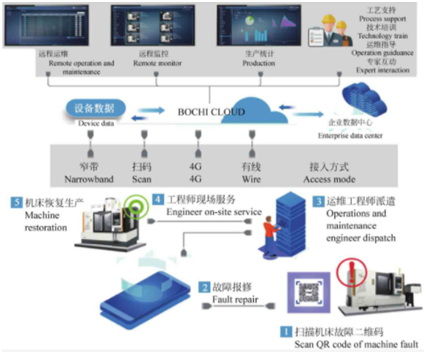
Figure 8 BOCHICLUD Technical Architecture [4]
4 Integration of Digital Production Line Systems
With the rapid development of integrated control system technology, automated production lines are moving towards higher levels of automation and integration. Integrated control of production lines is the networking of intelligent devices that need to be connected through a certain network, making them a whole, integrating and interacting internal information to achieve control objectives. There are two types of integrated control for production lines: equipment integration and information integration. Device integration is the integration of various devices with independent control functions into an organic whole through a network. This whole is an integrated control system that is both independent and related, and can be configured according to different production needs. Information integration is the application of functional modular design concepts to achieve dynamic resource allocation, device monitoring, data collection and processing, quality control and other functions, forming basic functional modules including independent control and other processing functions. Each functional module realizes standardized interconnection, and specific control modes and scheduling strategies are used to construct functional units to achieve expected goals, thereby achieving integrated control.
Traditional automation enterprises focus on equipment level automation implementation, but are not familiar with upper level systems such as SCADAMES/ERP, which leads to neglecting the digital acquisition of production line information and the horizontal and vertical flow of production information. MES/ERP and other software system enterprises focus on data analysis and deployment control at the upper system level. It is difficult to involve hardware devices and control methods with different models of execution devices and controllers at the lower level, which affects the vertical flow of information. Through digital measurement, the digital acquisition and circulation of manufacturing information (key parameters) can be achieved, which can break down the barriers between the upper system and the lower production line, release existing high-quality productivity, and accelerate the development process of China's manufacturing industry. By integrating tooling design, manufacturing, and management technologies, constructing a digital production line for tooling, and achieving smooth data flow in all stages of the tooling development process, the role of digital technology in the tooling development process can be fully utilized, thereby improving tooling manufacturing accuracy and efficiency, shortening development cycles, and reducing development costs.
Integrated control of production lines is an organic whole that combines communication, computer, and automation technologies. In order to coordinate the work of various equipment and subsystems in the production line, the system adopts PLC and its distributed remote I/O module to achieve centralized management and decentralized control of production units; At the same time, the PLC receives management from the upper MES system, including operator information verification, product control, material management, and other information. The structure of the production line control system is shown in Figure 9, and the communication content includes operator identification, production line body status, robot information, workpiece processing information, machine tool working status, and various fault information.
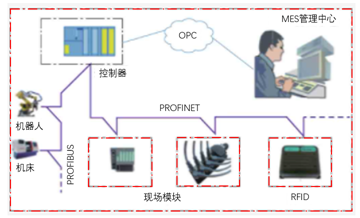
Figure 9 Schematic diagram of the production line control system structure
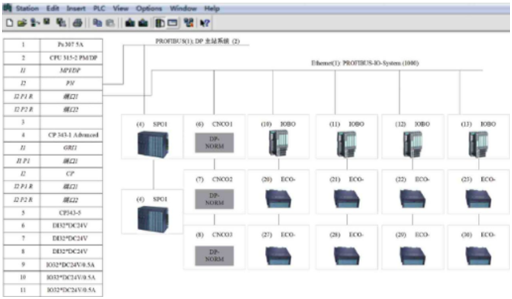
The hardware configuration of the control system is shown in Figure 10, which uses a PROFINET network to communicate with the underlying field IO devices. The IO devices include modules with Ethernet functionality such as IM151-3PN field module, ET200ecoPN input/output module, RF180C communication module, etc. In order to share data with other PLC systems in the workshop, the control system is also equipped with an industrial grade PN/PN coupler. Through this bridge, information exchange between the automatic production line and other PLC systems in the workshop can be achieved. At the same time, in order to ensure the reliability of production, fiber optic ring network connections are used between the controllers of each unit. Once the MES system fails, the control system can operate normally without the MES system.