


The knowledge that the CNC workshop director needs the most! Complete Guide to Correct Operations for 17 Job Types!
There are many types of work in the workshop. As the workshop director, do you understand the specific work of each type of work? In addition to the specific work, safety issues cannot be ignored. This dry cargo allows you to have a clear understanding of the safety operations for various types of work.
1, The injuries caused by mechanical accidents mainly include the following types
1. Damage caused by rotating parts and components of mechanical equipment. For example, gears, pulleys, pulleys, chucks, shafts, light screws, lead screws, supply shafts, and other components in machinery and equipment are all in rotational motion. The main forms of injury caused by rotational motion are twisting and object impact injuries.
2. Injuries caused by the linear movement of parts and components of mechanical equipment. For example, the pressure components of forging hammers, punching machines, sheet metal cutting machines, the headboard of planing machines, the bed surface of gantry presses, as well as bridge cranes, small cars, and lifting structures, all move in a straight line. The injuries caused by components and parts used for linear transportation mainly include crushing, smashing, and squeezing injuries.
3. Injury caused by cutting tools. For example, turning tools on lathes, milling cutters on milling machines, drill bits on drilling machines, grinding wheels on grinding machines, saw blades on sawing machines, and so on are all cutting tools used for machining parts. The injuries caused by cutting tools during machining of parts mainly include burns, punctures, and cuts.
4. Injury caused by processed parts. Mechanical equipment may cause injury to personnel during the processing of parts. This type of injury accident mainly includes: ① The workpiece being processed is not firmly fixed and thrown out to injure people, for example, if the lathe chuck is not firmly clamped, the workpiece will be thrown out to injure people during rotation. ② The processed parts may cause injury during lifting and loading and unloading.
5. Damage caused by electrical systems. The mechanical equipment used in the factory is mostly powered by electricity, so each mechanical equipment has its own electrical system. Mainly including electric motors, distribution boxes, switches, buttons, local lighting, as well as grounding and feeding wires. The main harm of electrical systems to humans is electric shock.
6. Injury caused by hand tools.
7. Other injuries. Besides causing various injuries mentioned above, mechanical equipment may also cause other injuries. For example, some mechanical equipment may emit strong light, high temperature, chemical and radiation energy, as well as dust and toxic substances during use, which may cause harm to the human body.
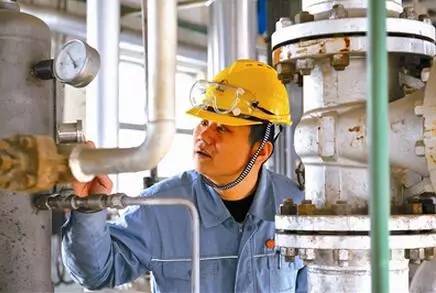
2, What are the basic safety requirements for mechanical equipment?
The basic safety requirements for mechanical equipment mainly include:
1. The layout of mechanical equipment should be reasonable, making it easy for operators to load and unload workpieces, observe processing, and remove debris; It should also facilitate inspection and maintenance by maintenance personnel.
2. The strength and stiffness of the parts and components of mechanical equipment should meet safety requirements, and the installation should be firm without frequent failures.
3. According to relevant safety requirements, mechanical equipment must be equipped with reasonable, reliable, and non operational safety devices. For example:
(1) Safety protection devices such as protective shields, baffles, and railings should be installed for rotating parts to prevent twisting injuries.
(2) For parts and components that can cause dangerous accidents such as overpressure, overload, over temperature, over time, over travel, etc., safety devices should be installed, such as overload limiters, travel limiters, safety valves, temperature relays, time circuit breakers, etc., so that when a dangerous situation occurs, the safety device can eliminate the danger and prevent the occurrence of accidents.
(3) When certain actions require warning or reminder to people, signal devices or warning signs should be installed. Sound signals such as bells, horns, and buzzers, as well as various light signals and warning signs, all belong to this type of safety device.
(4) Interlocking devices should be installed for certain parts and components whose action sequence cannot be reversed. A certain action must be taken after the previous action is completed, otherwise it is impossible to take action. This ensures that accidents will not occur due to incorrect sequence of actions.
4. The electrical devices of mechanical equipment must meet the requirements of electrical safety, mainly including the following points:
(1) The power supply wires must be installed correctly and there must be no damage or exposed copper.
(2) The insulation of the motor should be good, and its wiring board should be protected by a cover plate to prevent direct contact.
(3) Switches, buttons, etc. should be intact and undamaged, and their live parts should not be exposed.
(4) There should be a good grounding or neutral connection device, and the connected wires should be firm without any disconnection.
(5) Local lighting should use a voltage of 36V, and 1lOV or 220V voltage is prohibited.
5. The control handle and foot switch of mechanical equipment should meet the following requirements:
(1) Important handles should have reliable positioning and locking devices. The coaxial handle should have a significant difference in length.
(2) The handwheel can detach from the shaft during maneuvering to prevent injury to personnel caused by the rotation of the shaft.
(3) The foot switch should have a protective cover or be hidden in the recessed part of the bed to prevent falling parts and components from falling onto the switch, starting mechanical equipment and injuring people.
(6) The operation site of mechanical equipment should have a good environment, with appropriate lighting, moderate humidity and temperature, low noise and vibration, and neatly arranged parts, fixtures, etc. Because this can help the operator feel relaxed and focus on their work without any mistakes.
(7) Each mechanical equipment should develop safety operating procedures and inspection, lubrication, maintenance and other systems based on its performance, operating sequence, etc., so that operators can comply.
3, What are the common protective devices in machining workshops? What is the main function?
The common protective devices in the machining workshop include protective covers, protective baffles, protective railings, and protective nets. Protective devices should be installed in hazardous parts of mechanical equipment such as transmission belts, couplings with exposed gears close to the ground, rotating shafts, pulleys, flywheels, grinding wheels, and electric saws. Safety devices should be installed on the spinning parts of pressure machinery such as presses, rolling machines, rolling machines, electric planers, and shearing machines. Protective covers are used to isolate exposed rotating parts, such as pulleys, gears, sprockets, rotating shafts, etc. There are two forms of protective barriers and nets: fixed and movable, which serve to isolate and block the splashing of metal chips. Protective railings are used to prevent high-altitude workers from falling or to designate safe areas. Overall, the forms of protective devices mainly include fixed protective devices, interlocking protective devices, and automatic protective devices
4, What are the safety management regulations for mechanical equipment operators?
To ensure that mechanical equipment does not cause work-related accidents, not only should the equipment itself meet safety requirements, but more importantly, operators are required to strictly follow safety operating procedures. Of course, the safety operating procedures for mechanical equipment vary depending on their types, but their basic safety rules are:
1. Wear personal protective equipment correctly. What should be worn must be worn, and what should not be worn must not be worn. For example, during mechanical processing, female workers are required to wear protective hats, and if not worn, their hair may be twisted in. At the same time, it is required not to wear gloves. If worn, the rotating part of the machinery may twist the gloves in and injure the hands.
2. Before operation, it is necessary to conduct a safety check on the mechanical equipment and run it empty. Only after confirming that it is normal can it be put into operation.
3. Mechanical equipment should also undergo safety inspections according to regulations during operation. Especially for tightened objects, check if they have become loose due to vibration in order to re tighten them.
4. Equipment is strictly prohibited from operating with faults and must not be used in moderation to prevent accidents.
5. Mechanical safety devices must be used correctly according to regulations and must not be dismantled or unused.
6. The cutting tools, fixtures, and processed parts used in mechanical equipment must be firmly clamped and not loosened.
7. It is strictly prohibited to adjust mechanical equipment by hand during operation; It is also prohibited to measure parts by hand, lubricate, clean debris, etc. If necessary, the mechanical equipment should be shut down first.
8. During the operation of mechanical equipment, operators are not allowed to leave their work positions to prevent any problems from being left unattended.
9. After the work is completed, the switch should be turned off, the cutting tools and workpieces should be removed from the working position, and the work site should be cleaned. The parts, fixtures, etc. should be arranged neatly, and the mechanical equipment should be cleaned.
5, How to prevent work-related accidents in metal cold working workshops?
There are many types of machine tools in the metal cold working workshop. As long as the workplace is properly arranged, necessary protective and safety devices are installed, and safety operating procedures are strictly followed, it can effectively prevent work-related accidents.
Machine tool layout requirements:
1. Prevent parts or chips from being thrown out and injuring people.
2. The operator is not exposed to direct sunlight and may experience dizziness.
3. Convenient handling of finished and semi-finished products and cleaning of metal chips.
4. The workshop should have a safe passage to ensure smooth and unobstructed movement of personnel and vehicles.
Protective device requirements:
1. Protective cover: Isolate exposed rotating parts.
2. Protective railings. Machine parts that are prone to injury during operation, as well as machine tools that are not operated on the ground, should be equipped with protective railings with a height of no less than 1m.
3. Protective shield: prevents debris, chips, and coolant splashing.
Requirements for safety devices:
1. Overload safety device: automatically disengages or stops when overloaded.
2. Travel safety device: The moving parts can automatically stop or return to the predetermined position.
3. Sequential action interlocking device: Before one action is completed, the next action cannot proceed.
4. Accident interlocking device: In the event of a sudden power outage, the compensation mechanism can immediately act or the machine tool can stop.
5. Brake device: Avoid unloading workpieces during machine tool rotation; When a sudden accident occurs, the machine tool can be stopped in a timely manner.

6, What safety precautions should car workers pay attention to?
The safety precautions that lathe workers should pay attention to include:
1. Wear tight protective clothing and keep the cuffs open; Wear a protective helmet for long hair; Do not wear gloves during operation.
2. Loading and unloading the chuck on the spindle of the machine tool should be carried out after the machine is stopped, and the power of the electric motor cannot be used to remove the chuck.
3. It is best to use protective covers on the protruding parts of the chuck, dial, and chicken heart clamp used to hold the workpiece, so as not to entangle clothes or other parts of the body. If there is no protective cover, be careful to leave during operation and not get too close.
4. When clamping workpieces with a tip, it is important to ensure that the tip and center L are completely consistent. Damaged or skewed tips should not be used. Before use, the tip and center hole should be wiped clean, and the rear tailstock tip should be firmly pressed.
5. When turning slender workpieces, to ensure safety, a center frame or tool holder should be used, and the part that grows out of the lathe should be marked.
6. When turning irregularly shaped workpieces, a balance block should be installed and a balance test should be performed before cutting.
7. The tool clamping should be firm, and the protruding part of the tool head should not exceed 1.5 times the height of the tool body. The shape and size of the gasket under the tool should be consistent with the shape and size of the tool body, and the gasket should be as few and flat as possible.
8. For strip shaped chips and spiral shaped chips that have been cut, hooks should be used to remove them in a timely manner, and hand pulling should be avoided.
9. To prevent crushing chips and injuring people, transparent baffles should be installed in appropriate positions.
10. Except for measuring tools installed on the lathe that automatically measure during operation, the workpiece should be stopped for measurement and the tool holder should be moved to a safe position.
11. When sanding the surface of the workpiece with sandcloth, move the cutting tool to a safe position and be careful not to let hands and clothes come into contact with the surface of the workpiece.
12. When grinding the inner hole, do not use your fingers to support the sandcloth. Use a wooden stick instead, and the speed should not be too fast.
13. Prohibit placing tools, fixtures, or workpieces on the lathe bed and spindle gearbox.
7, What safety precautions should milling workers pay attention to?
The safety precautions that milling workers should pay attention to include:
1. At the beginning of cutting, the milling cutter must slowly feed towards the workpiece and there must be no impact during cutting to avoid affecting the accuracy of the machine tool or damaging the cutting edge.
2. The processed workpiece should be leveled and clamped to prevent accidents caused by loosening during the working process.
3. Adjusting speed and direction, as well as correcting workpieces and tools, must be done after parking.
4. Gloves should not be worn during work.
5. Always use a brush to remove chips from the bed surface, and stop the machine to remove chips from the milling cutter.
6. After using a blunt milling cutter, it should be stopped to grind or change the cutting edge. Before stopping, the cutter should be retracted. Do not stop the machine until all the cutting tools have left the workpiece.
8, What safety precautions should planers pay attention to?
The safety precautions that planers should pay attention to include:
1. The planer should be clamped tightly, and there should be a certain gap between the blade and the workpiece before work. The first cutting should not be too deep to prevent damaging the blade or injuring people.
2. Do not stand in front of the cow head planer during operation, let alone lower your head to check the work in front of the cow head planer.
3. Adjust the machine tool stroke and tighten the bolts that control the stroke.
4. Install an upright cylindrical protective shield that can be flipped up around the surface of the planer.
5. Concentrate the chip cleaning in a specially designed chip cutter to avoid cutting and injuring the feet
9, What safety precautions should grinder workers pay attention to?
The safety precautions that grinding machine workers should pay attention to include:
1. Before driving, it is necessary to check whether the device of the workpiece is correct, whether the fastening is reliable, and whether the magnetic suction cup is normal. Otherwise, driving is not allowed.
2. When driving, use manual adjustment to leave an appropriate gap between the grinding wheel and the workpiece, and reduce the initial feed amount to prevent the grinding wheel from cracking.
3. Measurement of workpieces, adjustment of machine tools, and cleaning work should be stopped before proceeding.
4. To prevent injury from fragments when the grinding wheel is damaged, the grinding machine must be equipped with a protective cover. It is prohibited to use grinding wheels without protective covers for grinding.
10, What safety precautions should drilling machine workers pay attention to?
The safety precautions that drilling machine workers should pay attention to include:
1. Do not wear gloves during operation and do not use your hands to remove iron filings.
2. The head should not be too close to the drilling machine, and a hat must be worn during work.
3. Before drilling, the workbench should be tightened, and the rocker arm of the radial drilling machine should also be tightened before drilling can begin.
4. When starting drilling and when the workpiece is about to drill through, do not apply too much force.
11, What are the main contents of stamping safety operating procedures?
When operating on stamping equipment, operators should follow the following safety operating procedures:
1. Before starting the operation, it is necessary to carefully check whether the protective device is intact, and whether the clutch braking device is flexible and safe and reliable. All unnecessary objects on the workbench should be cleaned up to prevent them from falling onto the foot switch during work, which may cause accidents due to sudden start of the punching machine.
2. When punching small workpieces, do not use your hands. There should be dedicated tools and it is best to install an automatic feeding device.
3. The operator must be careful in controlling the foot switch, and when loading and unloading workpieces, their feet should be away from the foot switch. It is strictly prohibited for outsiders to stay around the foot switch.
4. If the workpiece is stuck in the mold, special tools should be used to remove it, and it is not allowed to be held by hand. The foot should be removed from the foot pedal.
12, What safety precautions should fitters pay attention to?
The safety precautions that fitters should pay attention to include:
1. The tools used by fitters must be inspected before use.
2. Iron wire protective nets should be installed on the bench of the fitter. When chiseling, attention should be paid to the safety of the workers on the opposite side, and the use of high-speed steel as chisels is strictly prohibited.
3. When using a hand saw to cut workpieces, the saw blade should be appropriately tightened to prevent it from breaking and injuring people.
4. When using a sledgehammer, attention must be paid to the environmental conditions in front, back, left, right, up and down. It is strictly prohibited to stand within the range of motion of the sledgehammer, and it is not allowed to use a sledgehammer to hit a small hammer, nor is it allowed to use a small hammer to hit a sledgehammer.
5. When working in multiple layers or intersections, attention should be paid to wearing a safety helmet and following unified instructions.
6. After the maintenance of the equipment is completed, all safety protection devices, safety valves, and various sound and light signals should be restored to their normal state.
13, How to prevent work-related accidents in metal hot working workshops?
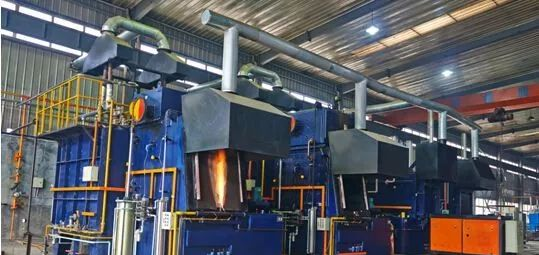
The production characteristics of metal hot working workshops are multiple production processes, large lifting and transportation volumes, and the production process is prone to producing high temperatures, toxic gases, and dust, which worsens the working environment and makes it prone to work-related accidents. So, the metal hot working workshop must take some effective safety measures:
1. Carefully select furnace materials to prevent the mixing of explosives, and the materials used must be thoroughly dried; The added alloy needs to be preheated.
2. When the molten metal is discharged from the furnace, electric, pneumatic, or hydraulic eye blocking mechanisms or rotary front furnaces should be used.
3. Strict measures should be taken to prevent the infiltration of groundwater and surface water into the pit.
4. Containers of molten metal must meet manufacturing quality standards; The metal liquid inside the ladle should not be too full.
5. The forging hammer should be operated by an operator or a robotic arm to prevent the oxidation skin of hot forgings from flying out and injuring people; Isolation and protective covers should be installed in front of the operator and air hammer driver's seat to prevent burns and provide insulation.
6. Tools and workpieces must be preheated before being put into the heat treatment salt furnace, and railings or protective covers should be installed around the quenching oil pool.
7. The welding operation site should be isolated or appropriately shielded, and the shielding material should not be made of metal surfaces.
In addition, the workshop should have a safe passage, the ground should be flat and not slippery, and ensure smooth flow. The workshop should have sufficient lighting, and the factory design should be suitable for mechanical ventilation and natural ventilation. On the premise of not affecting production and transportation, each process and position should be isolated from each other as much as possible. Equipment that is prone to unsafe factors should also be isolated if necessary, and safety railings or protective nets should be set up. Workers in the metal hot working workshop must be equipped with necessary protective equipment such as safety helmets, protective goggles, and protective shoes.
14, What safety precautions should steelmakers pay attention to?
The safety precautions that steelmakers should pay attention to include:
1. It is prohibited to add damp raw materials, scrapped weapons, etc. as scrap steel into the furnace to prevent explosions. Steel liquid and red slag shall not be poured into damp steel drums, steel slag ladles, or damp ground.
2. To prevent splashing and explosion accidents during melting, be careful not to add excessive oxidants and do not vigorously stir the molten steel.
3. Do not fill the steel ladle too full, and strictly follow the operating procedures during crane lifting to prevent overturning accidents.
4. If any furnace leakage, package leakage, interruption of circulating water, or water leakage inside the furnace is found, corresponding safety measures should be taken immediately.
5. Labor protection equipment must be worn, and those who do not wear labor protection equipment are not allowed to work on duty.
15, What safety precautions should casting workers pay attention to?
The safety precautions that casting workers should pay attention to include:
1. The casting site and pit must be kept dry and free of water to prevent splashing of molten iron and injury to people.
2. The tools used, such as tongs, sticks, hooks, etc., should be preheated.
3. The iron liquid in the bag should not be too full. When lifting the bag, do not lift it off or suddenly stop, and coordinate and cooperate.
4. Before casting, the pressure iron on the upper and lower boxes of the sand mold should be firmly pressed or tightened with screws, and the riser should be checked and the airway should be opened properly.
5. During casting, it is not allowed to look directly at the riser, and air should be injected in a timely manner to prevent gas explosion inside the mold.
6. During casting, unrelated personnel are not allowed to approach. Wear protective goggles when looking at newly cast flames.
16, What safety precautions should forging workers pay attention to?
The safety precautions that forging workers should pay attention to include:
1. When taking and delivering molds, punches, shims, etc. on the anvil, clamps must be used and hand use is strictly prohibited.
2. When operating manually, the hammer should be coordinated with each other and it is strictly prohibited to walk or work within 2-5m behind the hammer driver.
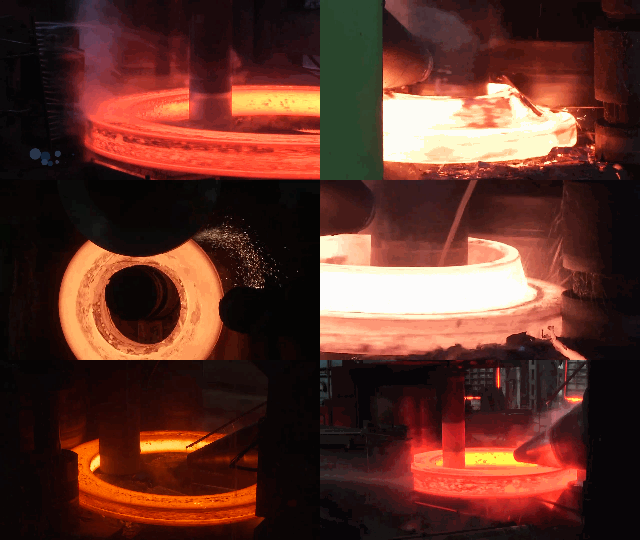
3. When cutting metal billets, be careful to lightly strike to prevent the cut material from flying out and injuring people. The grip of the pliers should not be facing the abdomen.
4. When the pneumatic hammer is activated, it is not allowed to hit the empty hammer, measure the size of the working object, and do not allow any part of the human body to enter the stroke of the hammer head. When inspecting or repairing, the hammer head must be fixed. Please note that flammable materials are not allowed to be stored near the heating furnace.
17, What injuries may occur during welding production?
During the welding process, welders should frequently come into contact with flammable and explosive gases, and sometimes work at high altitude, underwater, or in narrow spaces; The production of toxic gases, harmful dust, arc radiation, noise, high-frequency electromagnetic fields, etc. during welding can cause great harm to the human body. There is a possibility of occupational accidents such as explosions, fires, burns, poisoning, electric shock, and high-altitude falls occurring at the welding site. Welders may also suffer various injuries during work, causing occupational diseases such as blood, eyes, skin, lungs, etc. Welders are special operators who must undergo safety training and pass exams before being allowed to operate independently.


