The impact of machining allowance on machining accuracy!
With the continuous improvement of the quality requirements for machined products, people have invested a lot of time and energy in exploring methods and measures to improve product quality. However, they have ignored the impact of machining allowances on product quality in the machining process, believing that only having allowances during the machining process will not have a significant impact on product quality. In the actual machining process of mechanical products, it is found that the size of the machining allowance of the parts directly affects the quality of the products.
If the machining allowance is too small, it is difficult to eliminate the residual shape and position errors and surface defects during the previous machining process; However, excessive machining allowance not only increases the workload of mechanical processing, but also increases the consumption of materials, tools, and energy. More seriously, the heat generated by cutting off a large amount of machining allowance during the machining process can cause deformation of the parts, increase the difficulty of machining the parts, and affect product quality. Therefore, it is necessary to strictly control the machining allowance of the parts.
one
The concept of machining allowance
Machining allowance refers to the thickness of the metal layer cut off from the machining surface during the machining process. The machining allowance can be divided into process machining allowance and total machining allowance. Process machining allowance refers to the thickness of the metal layer cut off on a surface in a single process, which depends on the difference in dimensions between adjacent processes. The total machining allowance refers to the total thickness of the metal layer removed from a certain surface during the entire machining process of a part from a blank to a finished product, which is the difference between the size of the same surface blank and the size of the part. The total machining allowance is equal to the sum of machining allowances for each process.
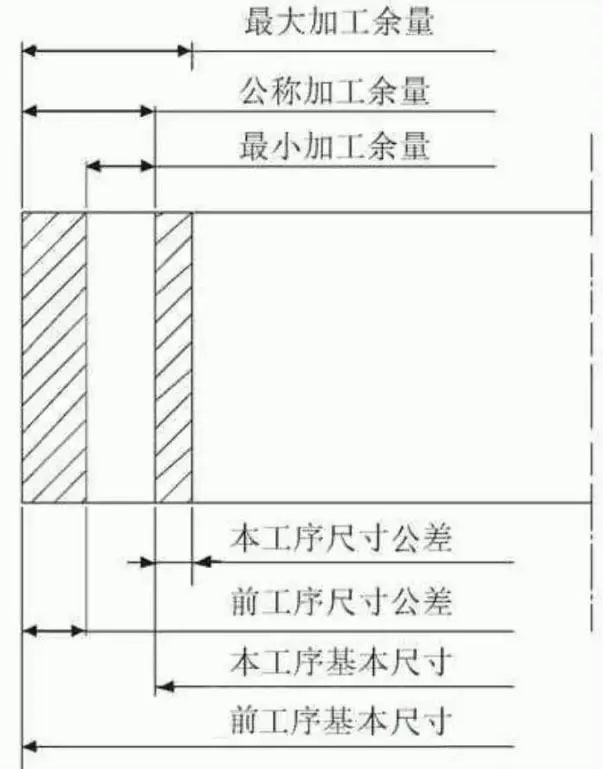
Due to the inevitable errors in raw material manufacturing and various process dimensions, both the total machining allowance and the process machining allowance are variable values, resulting in minimum and maximum machining allowances. The machining allowance and tolerance are shown in Figure 1. In the figure, the minimum machining allowance is the difference between the minimum process size of the previous process and the maximum process size of the current process; The maximum machining allowance refers to the difference between the maximum process size of the previous process and the minimum process size of the current process. The range of variation in the machining allowance of a process (the difference between the maximum and minimum machining allowances) is equal to the sum of the dimensional tolerances of the previous process and the current process. The tolerance zone for process dimensions is generally specified in the direction of the part entering the body. For shaft parts, the basic size is the maximum process size, while for holes, it is the minimum process size.
two
Analysis of the influence of machining allowance on machining accuracy
2.1 The impact of excessive machining allowance on machining accuracy
During the machining process, parts will inevitably generate cutting heat, some of which is carried away by iron chips and cutting fluid, some is transmitted to the tool, and some is transmitted to the workpiece, causing the temperature of the parts to rise. The temperature is closely related to the size of the machining allowance. With a large machining allowance, the rough machining time will inevitably become longer, and the cutting amount will also be appropriately increased, resulting in a continuous increase in cutting heat and a continuous rise in part temperature. The greatest harm caused by an increase in part temperature is the deformation of the parts, especially for materials that are sensitive to temperature changes (such as stainless steel), which has a greater impact. Moreover, this thermal deformation runs through the entire processing process, increasing the difficulty of processing and affecting product quality.
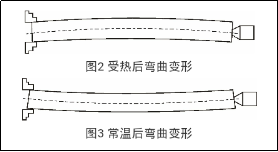
For example, when processing slender shaft parts such as screw rods, due to the use of a one clip one top machining method, the degree of freedom in the length direction is limited. If the temperature of the workpiece is too high, thermal expansion will occur. When the extension in the length direction is obstructed, the workpiece will inevitably undergo bending deformation due to stress, which brings great trouble to later processing. The bending deformation diagram of the workpiece after heating is shown in Figure 2. If processing continues at this point, the protruding part will be processed until the finished product. After cooling to room temperature, the part will undergo reverse deformation under stress, causing positional errors and affecting quality. The bending deformation diagram of the workpiece after room temperature is shown in Figure 3. After the diameter direction expands, the enlarged part will be cut off, and after the workpiece cools down, there will be cylindricity and dimensional errors. During precision screw grinding, the thermal deformation of the workpiece can also cause pitch errors.
2.2 The impact of small machining allowance on machining accuracy
The machining allowance of parts cannot be too large or too small. If the machining allowance is too small, it cannot eliminate the residual geometric tolerances and surface defects in the previous process, thereby affecting product quality. In order to ensure the machining quality of the parts, the minimum machining allowance left for each process should meet the basic requirements of the minimum machining allowance for the previous process. The schematic diagram of the factors that constitute the minimum machining allowance for a certain part's inner hole is shown in Figure 4. Figure 4a) shows the part to be machined with an inner hole. If the axis O1-O1 of the hole deviates from the reference axis O-O during the previous process, and there is a positional error n, and there is a cylindricity error p (such as taper, ellipse, etc.) and surface roughness error h (as shown in Figure 4b) in the inner hole, then in order to eliminate the positional tolerance before boring, the minimum machining allowance on one side of the boring sequence should include the values of the above errors and defects. Considering the inevitable installation error of the workpiece during the boring process, i.e. the error e between the original hole axis O-O and the rotation axis O ′ - O ′ after the workpiece installation (as shown in Figure 4c), as well as the dimensional tolerance T during the boring process, the minimum machining allowance z of this process can be expressed as follows:
Z ≥ T/2+h+p+n+e (Single side allowance)
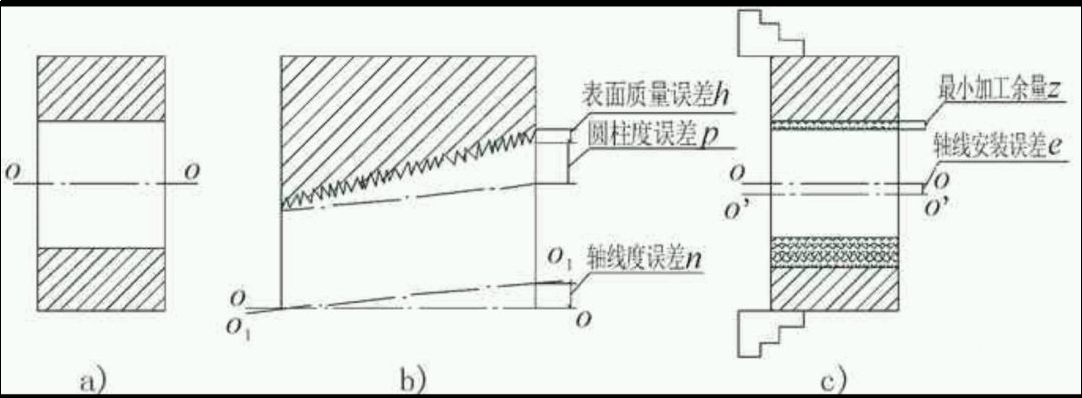
Figure 4 Diagram of the Composition Factors of Minimum Machining Allowance
The values and manifestations of the above errors vary for different parts and processes. When determining the processing allowance of a process, it should be treated differently. For example, slender shafts are prone to bending and deformation, and the straight-line error of the busbar has exceeded the tolerance range of diameter dimensions. The machining allowance of the process should be appropriately enlarged; For processes that use floating cutters and other tools to locate the machining surface itself, the influence of installation error e can be ignored, and the machining allowance of the process can be correspondingly reduced; For some precision machining processes mainly used to reduce surface roughness, the size of the machining allowance in the process is only related to the surface roughness h.
three
Reasonable selection of machining allowance
3.1 Principles for machining allowances of parts
The selection of machining allowance for parts is closely related to the material, size, accuracy level, and machining method used in the parts, and depends on the specific situation. When determining the machining allowance of parts, the following principles must be followed:
(1) The minimum machining allowance should be used to shorten the machining time and reduce the machining cost of the parts.
(2) Sufficient machining allowance should be left, especially for the final process. The machining allowance should ensure the accuracy and surface roughness specified on the drawing.
(3) When determining the machining allowance, consideration should be given to the deformation caused by heat treatment of the parts, otherwise it may result in scrap.
(4) When determining the machining allowance, consideration should be given to the machining method and equipment, as well as the possible deformation that may occur during the machining process.
(5) When determining the machining allowance, consideration should be given to the size of the machined parts. The larger the part, the greater the machining allowance. As the size of the parts increases, the possibility of deformation caused by cutting forces, internal stresses, etc. also increases.
3.2 Method for determining machining allowance
3.2.1 Empirical estimation method
Empirical estimation method is commonly used in production practice to determine machining allowance based on the design experience of process personnel or comparison with similar parts. For example, the machining allowance for rudder stock, rudder pins, intermediate shaft, and stern shaft in ships under construction is determined based on years of design experience of process personnel. Considering the importance of the workpiece and the influence of factors such as large volume and high stress on the forging blank, a semi precision machining allowance of 6mm is left after rough turning of the outer circle, a precision machining allowance of 3mm is left after semi precision turning, and a grinding allowance of 1mm is left after precision turning. In order to prevent the generation of waste due to insufficient processing allowance, the empirical estimation method generally estimates a larger processing allowance. This method is commonly used for single piece small batch production.
3.2.2 Table lookup correction method
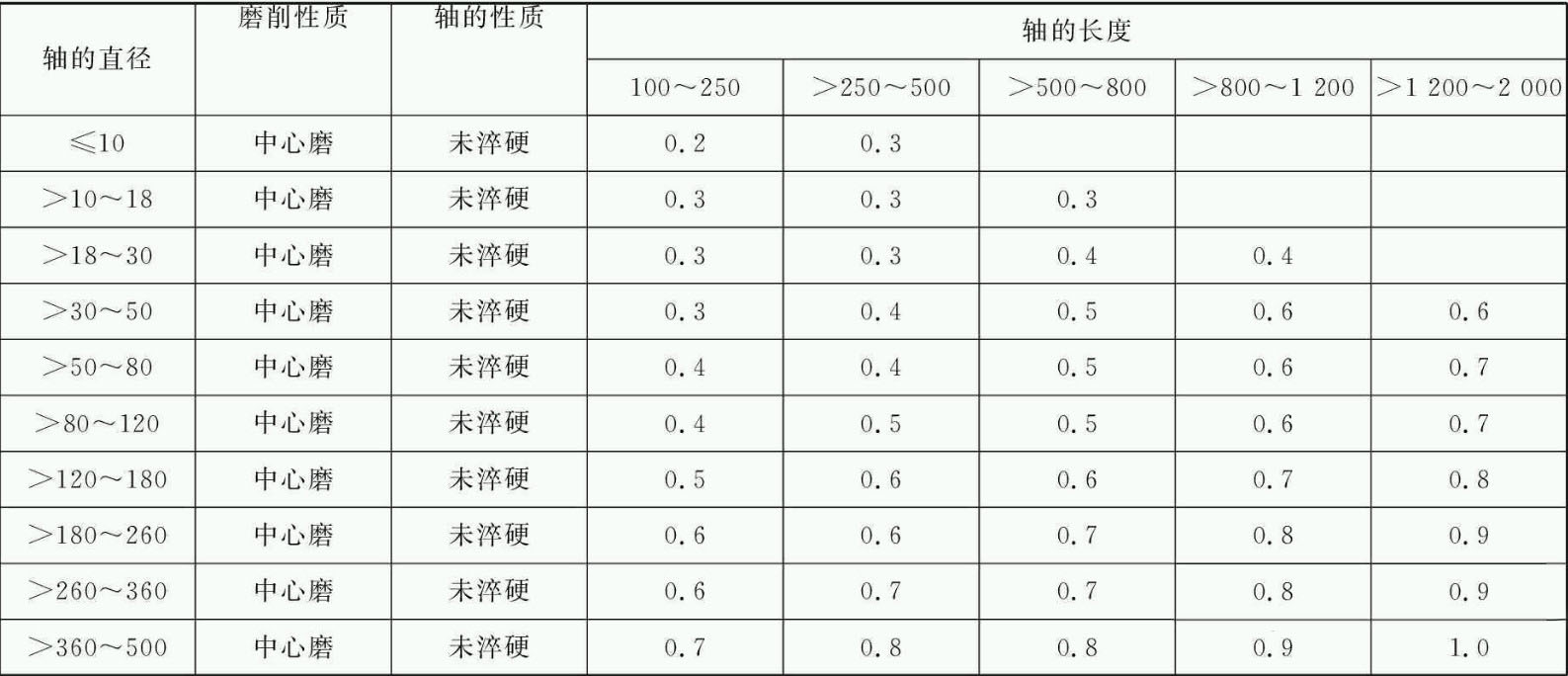
The lookup table correction method is a method of determining machining allowances based on data accumulated from production practice and experimental research, which is compiled into a table and revised in combination with actual machining conditions. This method is widely used. The machining allowances for precision turning and grinding of outer circles after rough turning of bearing parts are shown in Table 1 and Table 2, respectively.
3.2.3 Analysis and calculation method
The analytical calculation method is a method of determining machining allowance by analyzing and comprehensively calculating various factors that affect machining allowance based on experimental data and calculation formulas. The processing allowance determined by this method is both accurate and economically reasonable, but it requires the accumulation of comprehensive information, which is not as simple and intuitive as the above two methods. Therefore, this method is currently less applied.
four
epilogue
In actual production, due to the fact that the production method of many parts blanks is temporarily determined, for example, the stainless steel sleeve cast by centrifugal casting is changed to a steel plate coil and welded; The end cover of the cooler, the base of the motor, and the sandblasting parts of the gearbox are replaced with welded parts. There are many uncertain factors in the production process of these parts, and their shape errors are difficult to predict. Therefore, the three methods introduced in this article to determine the machining allowance of these parts are not applicable, and can only be flexibly mastered in the actual production process.
Table 1: machining allowance for the outer circle of shaft parts after rough turning and precision turning, mm
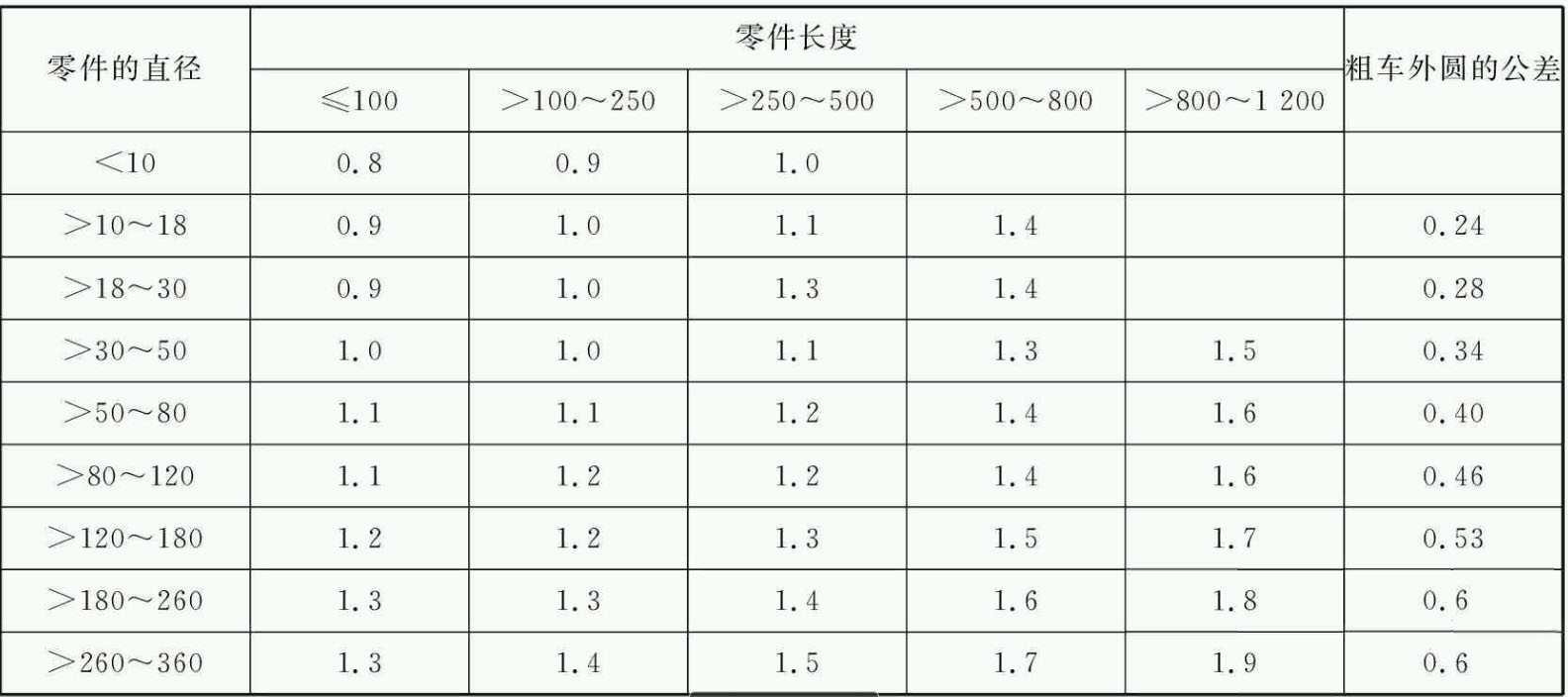
Table 2 Machining Allowance for Grinding Outer Circles of Axis Parts mm