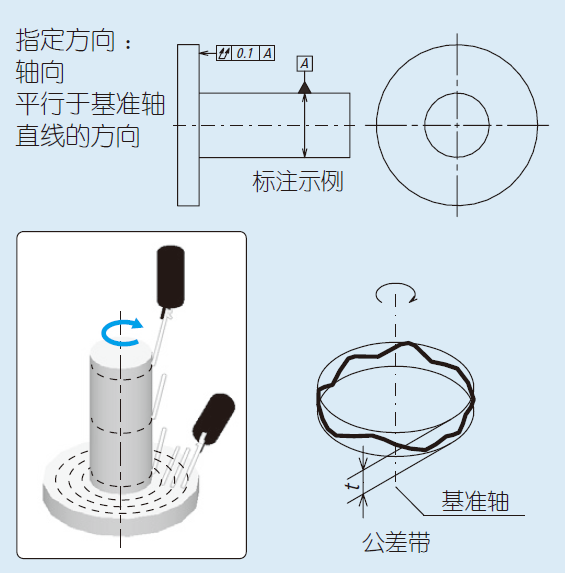
Can you distinguish between roundness, cylindricity, coaxiality, and concentricity?
In the manufacturing industry, it has been estimated that there are more circular workpieces than flat ones, ranging from screws, nuts, washers, to cylinders and bearings. The application of circular workpieces is indeed very high.
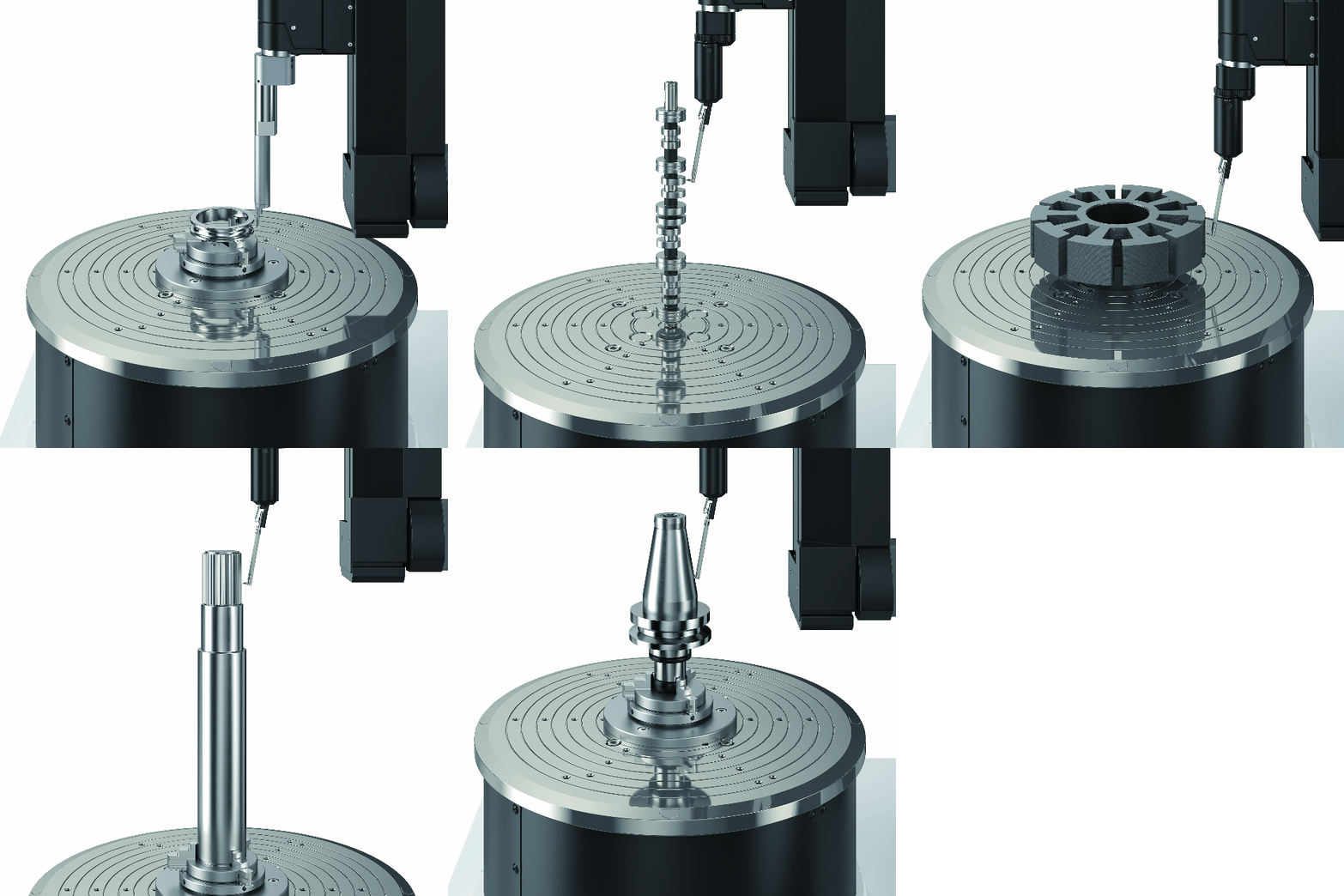
Measurement Example of Circular Workpiece
For these rotating components, the most urgent problem to be solved is how to evaluate their true circular "shape". Today, the editor will introduce the symbols and definitions related to roundness (reference standard: ISO/DIS 1101:2017, ISO 5459).
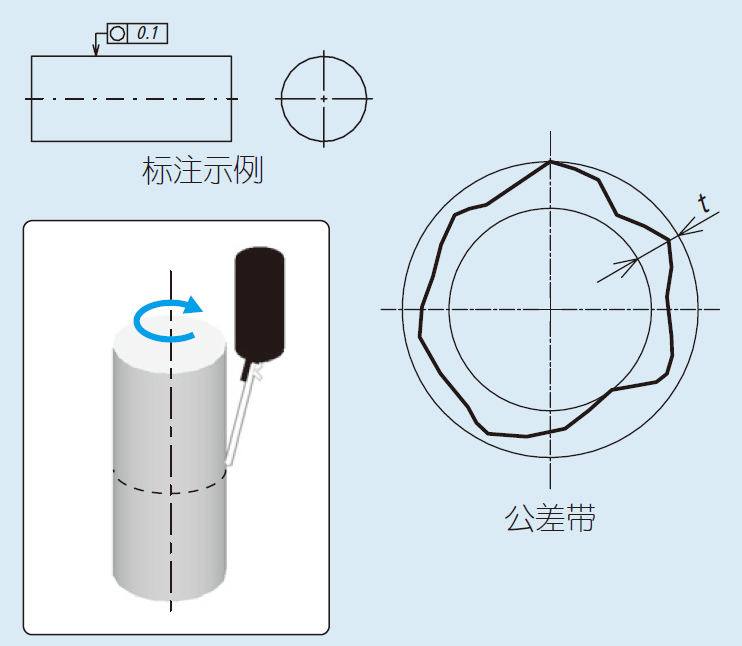
Roundness
The extraction of the circumference should be limited within the tolerance zone between two coplanar concentric circles with a radius difference of t.
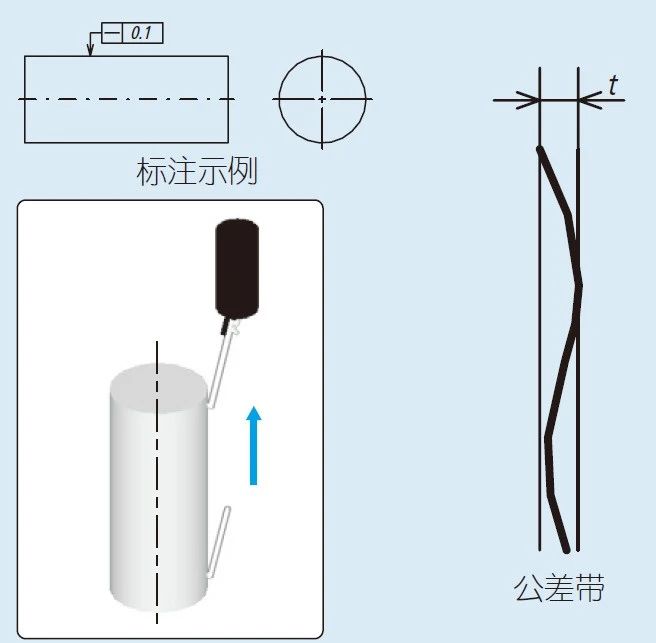
Straightness
The edges extracted from the cylindrical surface should be limited within the tolerance zone between two parallel lines in the specified direction and spaced t apart.
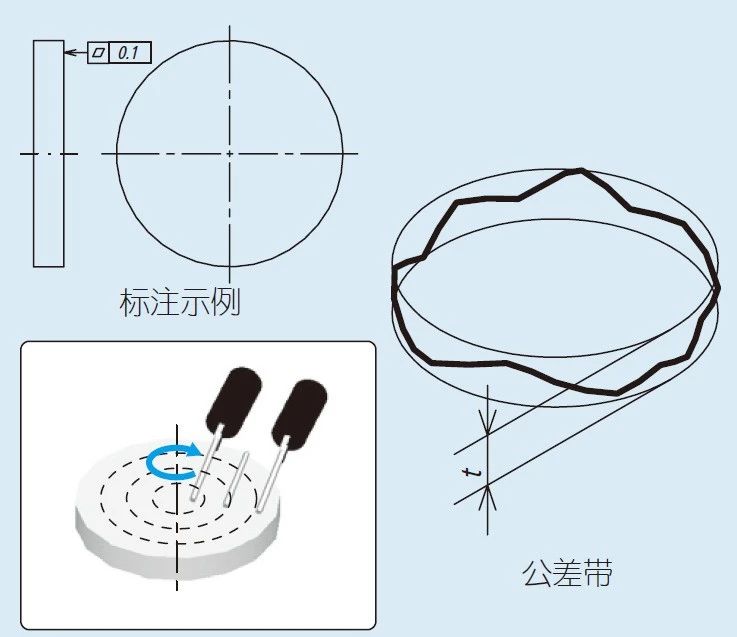
Flatness
It is the area between two parallel planes with a distance of tolerance value t.
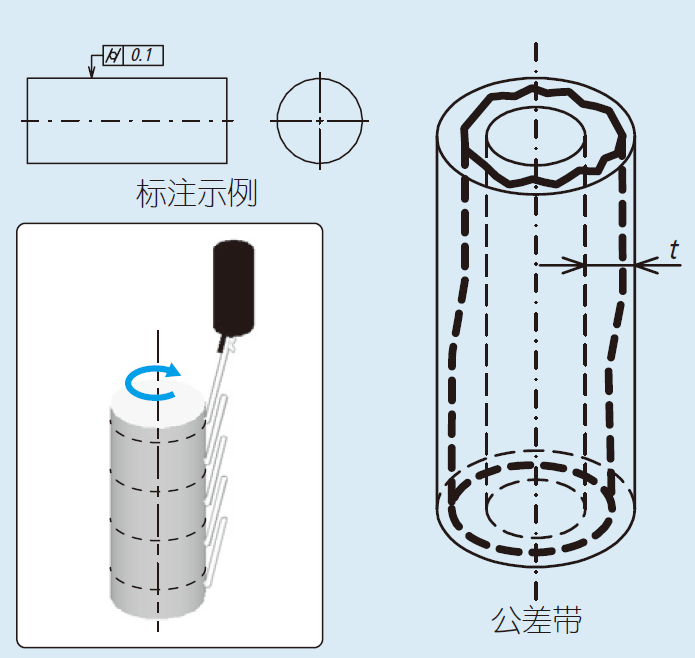
Cylindricity
The extraction of cylindrical surfaces should be limited within the tolerance zone formed between two coaxial cylindrical surfaces with a radius difference of t.
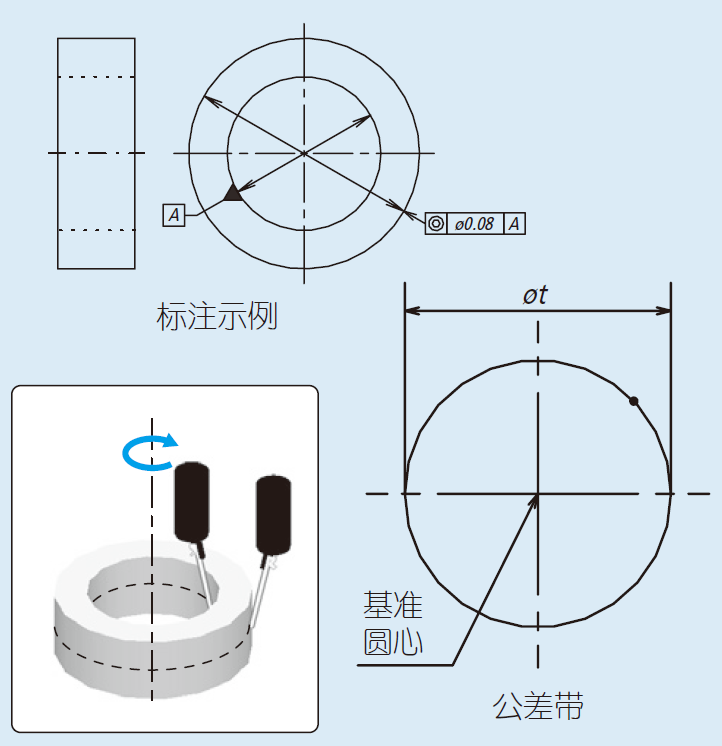
Concentricity
The extraction center of the circle should be limited within the tolerance zone formed by the circumference concentric with the reference with a diameter of t.
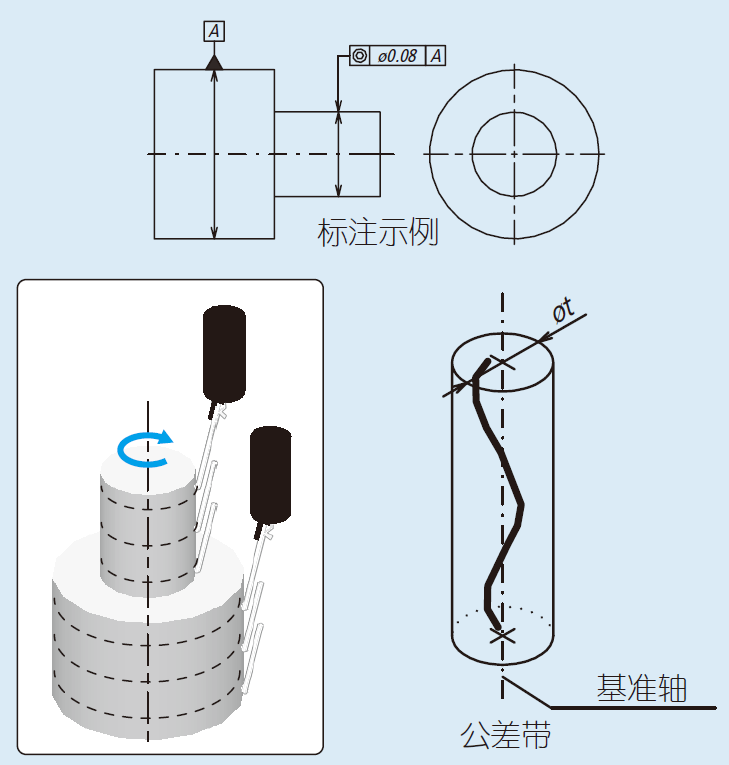
Coaxiality
The extraction axis should be limited within the tolerance zone formed by a cylindrical surface with a diameter of t that is coaxial with the reference.
verticality
The extraction axis should be limited to the tolerance area formed by the cylindrical surface with a diameter of t and perpendicular to the reference plane.
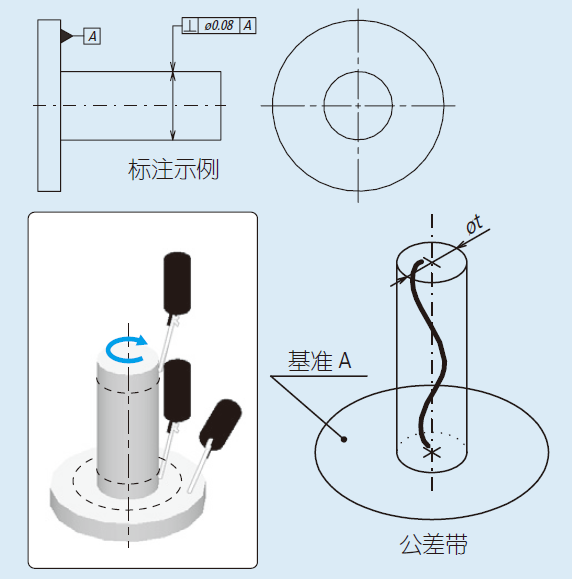
The extraction surface should be limited to the tolerance zone formed between two parallel planes with a spacing of t and perpendicular to the reference axis.
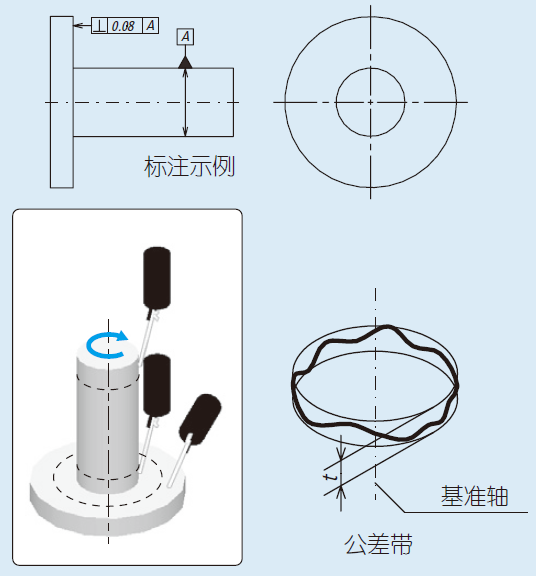
Circular jumping (radial and axial)
Radial circular runout:
In any section perpendicular to the reference axis, the extraction line should be limited within the tolerance zone formed between two coplanar concentric circles with a radius difference of t and centers on the reference axis.
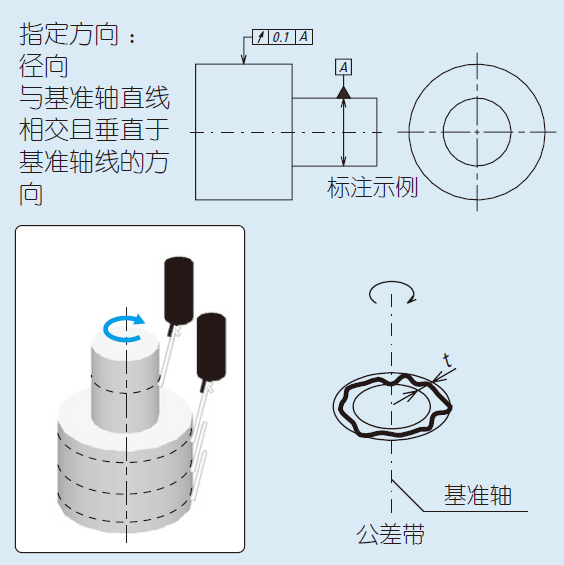
Axial circular runout:
On any cylindrical cross-section coaxial with the reference axis, the extracted circle should be limited within the tolerance zone formed between two equal circles at an axial distance t (on the cylindrical surface).
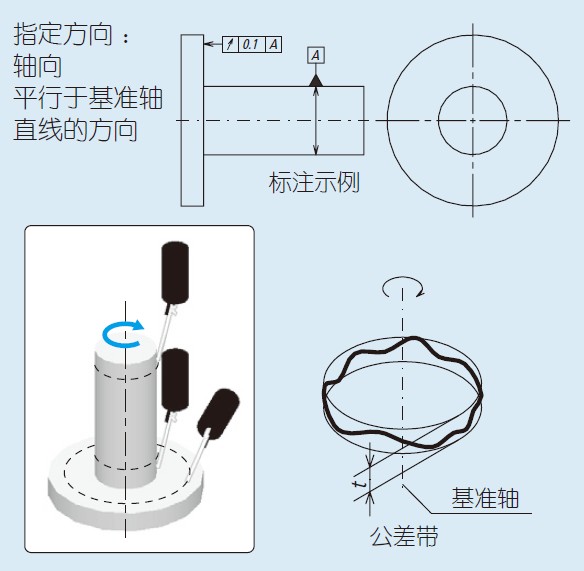
Full jump (radial and axial)
Radial full bounce:
The extracted surface should be limited within the tolerance zone formed between two cylindrical surfaces with a radius difference of t and coaxial with the common reference axis.
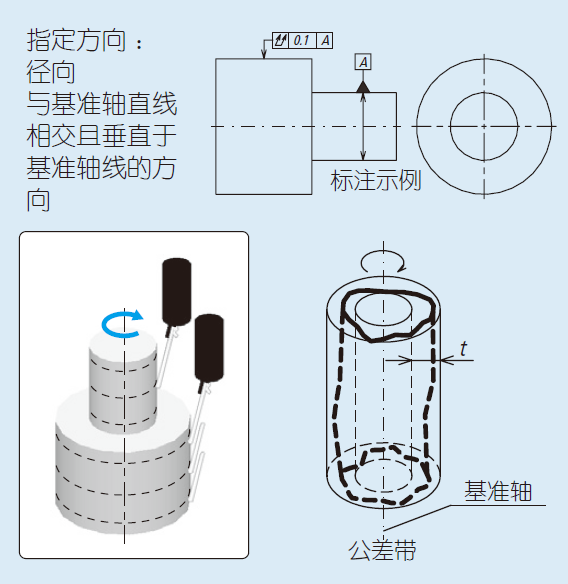
Axial full runout:
The extracted surface should be limited within the tolerance zone formed between two parallel planes with a spacing of t and perpendicular to the reference axis.