


90% of mechanical engineers can't remember! Ultra detailed basic knowledge points of mechanical design
Today we will share some basic knowledge of mechanical design, hoping to be helpful to everyone.
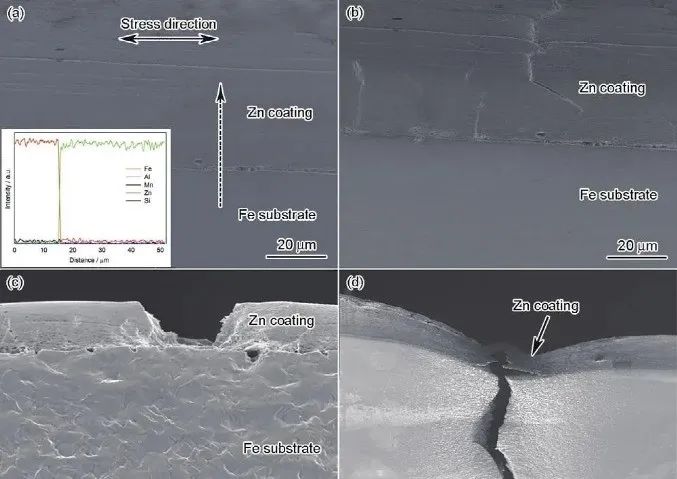
1. Failure forms of mechanical parts: overall fracture, excessive residual deformation, surface damage of parts (corrosion, wear, and contact fatigue), failure caused by normal working conditions.
2. Requirements that parts should meet in design: requirements to avoid failure within the predetermined lifespan (strength, stiffness, lifespan), structural process requirements, economic requirements, low quality requirements, and reliability requirements.
3. Design criteria for parts: strength criteria, stiffness criteria, life criteria, vibration stability criteria, and reliability criteria.
4. Design methods for parts: theoretical design, empirical design, and model experimental design.
5. Commonly used materials for mechanical parts: metal materials, polymer materials, ceramic materials, and composite materials.
6. The strength of parts is divided into static stress strength and variable stress strength.
7. Stress ratio: r=-1 is the symmetric cyclic stress; R=0 is the pulsating cyclic stress.
8. The BC stage is strain fatigue (low cycle fatigue); the CD stage is finite life fatigue; The line segment after point D represents the infinite life fatigue stage of the specimen; Point D represents the endurance fatigue limit.
9. Measures to improve the fatigue strength of parts: minimize the influence of stress concentration on the parts (load reduction grooves, open ring grooves), select materials with high fatigue strength, and specify heat treatment methods and strengthening processes that can improve the fatigue strength of materials.
10. Sliding friction: dry friction, boundary friction, fluid friction, and mixed friction.
11. The wear process of parts: running in stage, stable wear stage, severe wear stage; Efforts should be made to shorten the running in period, extend the stable wear period, and delay the onset of severe wear.
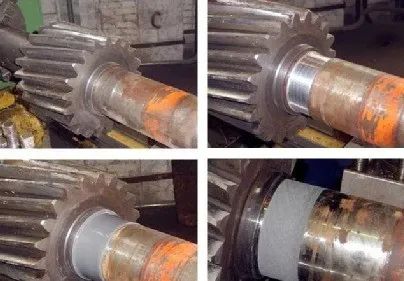
12. Classification of wear: adhesive wear, abrasive wear, fatigue wear, erosion wear, corrosion wear, and micro motion wear.
13. Lubricants are divided into four types: gas, liquid, solid, and semi-solid; Lubricating grease is divided into calcium based grease, nano based grease, lithium based grease, and aluminum based grease.
14. The thread profile of ordinary connection is equilateral triangle, which has good self-locking performance; The transmission efficiency of rectangular transmission threads is higher than that of other threads; The trapezoidal transmission thread is the most commonly used transmission thread.
15. The commonly used connecting threads require self-locking, so single thread threads are often used; The transmission thread requires high transmission efficiency, so double or triple thread is often used.
16. Ordinary bolt connection (with through holes or hinged holes on the connected parts), double headed screw connection, screw connection, and set screw connection.
17. The purpose of pre tightening threaded connections is to enhance the reliability and tightness of the connection, and prevent gaps or relative slippage between the connected parts under load. The fundamental problem with loose threaded connections is to prevent relative rotation of the screw pair under load. (Friction anti loosening, mechanical anti loosening, anti loosening of screw pair movement relationship)
18. Measures to improve the strength of threaded connections: reduce the stress amplitude that affects the fatigue strength of bolts (reduce bolt stiffness or increase the stiffness of the connected parts), improve the uneven distribution of load on the thread teeth, reduce the impact of stress concentration, and adopt reasonable manufacturing processes.
19. Key connection types: flat key connection (with working faces on both sides), semicircular key connection, wedge key connection, tangential key connection.
20. Belt transmission is divided into friction type and meshing type.
21. The maximum instantaneous stress of the belt occurs at the point where the tight edge of the belt begins to wrap around the small pulley; Take one week, stress changes four times.
22. Tensioning of V-belt drive: Regular tensioning device, automatic tensioning device, tensioning device using tensioning wheels.
23. The number of links in a roller chain is generally even (the number of teeth in the sprocket is odd), and excessive links are used when the roller chain is odd.
24. The purpose of chain drive tensioning is to avoid poor meshing and chain vibration when the slack edge of the chain is too large, and to increase the meshing angle between the chain and the sprocket.
25. Failure forms of gears: tooth breakage, tooth surface wear (open gears), tooth surface pitting (closed gears), tooth surface adhesion, plastic deformation (ridges on the driven wheel and grooves on the driving wheel).
26. Gear surfaces with a hardness greater than 350HBS or 38HRS are called hard faced teeth; On the contrary, it is a soft tooth surface gear.
27. Improving manufacturing accuracy and reducing gear diameter to reduce circumferential speed can both reduce dynamic loads; In order to reduce the dynamic load, the gear can be subjected to tooth top trimming; Making the teeth of a gear into a drum shape is to improve the distribution of tooth load.
The larger the diameter coefficient lead angle, the higher the efficiency and the worse the self-locking performance.
29. Modify the worm gear, and after the modification, the indexing circle and pitch circle of the worm gear still coincide, but the pitch line of the worm gear has changed and no longer coincides with its indexing circle.
30. Failure modes of worm gear transmission: pitting, tooth root fracture, tooth surface adhesion, and excessive wear; Failure often occurs on the worm gear.
31. Power loss of closed worm drive: meshing wear loss, bearing wear loss, and oil splashing loss when parts enter the oil pool and stir oil.
32. The worm gear transmission must calculate the thermal balance based on the condition that the heat generation per unit time is equal to the heat dissipation at the same time. Measures include installing heat sinks and increasing the heat dissipation area, installing a fan at the end of the worm shaft to accelerate air flow, and installing a circulating cooling pipeline inside the transmission box.
33. Conditions for forming hydrodynamic lubrication: The two surfaces that slide relative to each other must form a converging wedge-shaped gap; The two surfaces separated by the oil film must have sufficient relative sliding speed, and their movement must allow lubricating oil to flow from the large opening into the small opening and out; Lubricating oil must have a certain viscosity, and the oil supply must be sufficient.
34. Basic structure of rolling bearings: inner ring, outer ring, hydraulic body, and retainer.
35. 3 tapered roller bearings, 5 thrust ball bearings, 6 deep groove ball bearings, 7 angular contact bearings, N cylindrical roller bearings 00, 01, 02, 03 respectively d=10mm, 12mm, 15mm, 17mm 04 represents d=20mm, 12 represents d=60mm.
36. Basic rated life: 10% of the bearings in a group undergo pitting damage, and 90% of the speed or working hours at which pitting damage does not occur are considered as the life of the bearings.
37. Basic rated dynamic load: The load that the bearing can withstand when the basic rated life of the bearing is exactly 106 revolutions.
38. Bearing configuration method: double fulcrums are fixed in one direction, one fulcrum is fixed in both directions, and the other end is supported by the fulcrum, and both ends are supported by the fulcrum.
39. Bearings are divided according to load: shaft (bending moment and torque), spindle (bending moment), and transmission shaft (torque).


