


CNC Milling Machine
Your Professional CNC Milling Machine Manufacturer!
Sensing the significance of Industrial Machines in numerous industries, Zhejiang Haochen Smart Equipment Co.,Ltd has integrated its years of experience and come up with a range of dimensionally accurate Milling and metal Cutting Machines. Being one of the leading Milling machines Suppliers in China, we have truly assimilated in us a philosophy of providing total quality to our valued customers. Recognized for supplying precisely developed Lathe & Milling Machines, we have already become a name to be reckoned in the Engineering Industry. Utilized for shaping metals, our technologically-advanced Heavy Duty Lathe Machine has created a revolution in the industrial sector.
Professional Team
We have a team of skilled and experienced professionals who are well-versed in the latest technology and industry standards. Our team is dedicated to ensuring that our customers get the best service and support possible.
Efficient and Convenient
The company has established marketing networks around the world to provide high-quality services to customers in an efficient and convenient manner.

High Quality Products
We always put customer needs and expectations in the first place, refine on, continuous improvement, to seek every opportunity to do better, to provide customers with their expectations of quality products.
Advanced Equipment
We take great measures to ensure that we work with the industry’s highest quality equipment and that our equipment is regularly and meticulously maintained.
What is CNC Milling Machine?
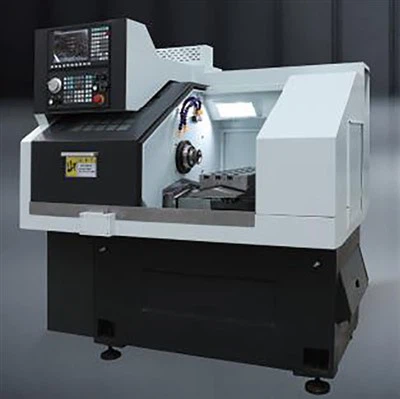
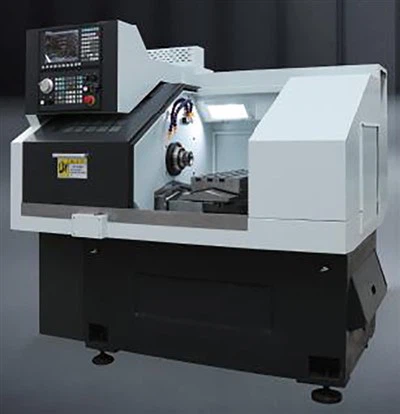
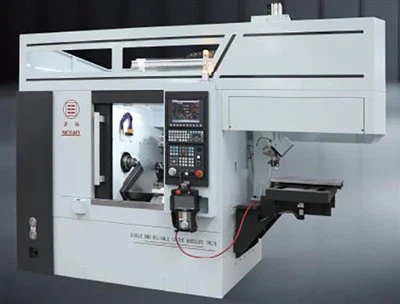
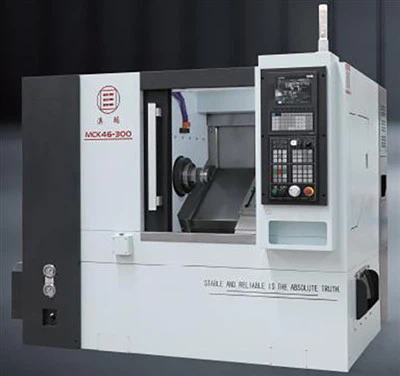
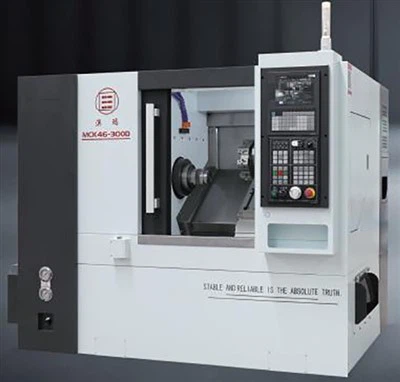
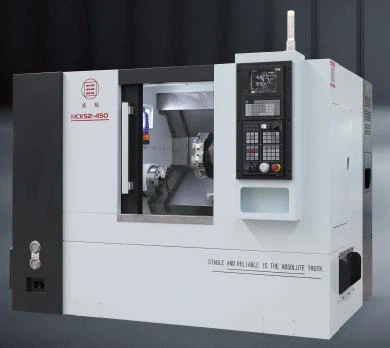
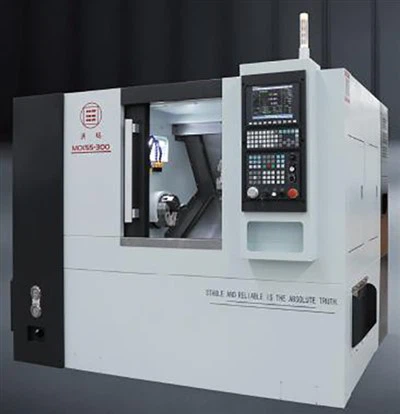
CNC milling is a manufacturing process that uses a cutting tool mounted on a rotating spindle to selectively remove material from a block of raw substrate. The workpiece is rigidly mounted to a table, and this table moves or rotates on different planes so the tool can work at many angles. Sophisticated CNC milling machines can have 5 or more axes of independent motion to make more complex shapes or to avoid having to move the workpiece to a separate machine.


Advantages of CNC Milling Machine
Because CNC mills operate based on computer programs rather than with manual workers, the process creates several benefits to boost your business’s bottom line, including:
Greater precision
With computer programs running the cuts, CNC mills allow you to reach a higher level of precision than you could with a manual machine. Because these machines don’t rely on human operators, they leave less room for human error.
More consistency
Another advantage of not having a human operator and minimizing human error is that CNC mills can produce more consistent products. If you need pieces that align precisely, take advantage of CNC milling’s automated uniformity.
Simplified complexity
If your piece requires many different cuts, tools or materials, many large CNC machines can more seamlessly integrate these changes, further contributing to a quicker, more efficient production process.
Less waste
Fewer errors mean CNC mills produce less waste. CNC machines can achieve higher efficiency with their cuts than manual machines.
Less labor-intensive
Save on labor costs by CNC milling machine. Doing so will also free up your current employees to work on other critical tasks because they no longer have to spend time operating a manual machine.
Faster production
Because they’re more efficient and don’t require a human operator, CNC machines can also complete a product much more quickly than manual mills.

The milling process starts with positioning the workpiece on the CNC machine’s work surface or holding device. Milling tools are then installed into the machine’s spindle. Depending on the programmed requirements from CAD, the milling can proceed in either a horizontal or vertical direction. After securing the workpiece, downloading the program, and attaching the tool, the operator initiates the program to commence the milling process.
Depending on the instructions from CAD, the workpiece is manipulated, shifted, rotated, and positioned for the work of the cutting tool. The cuts can come in three possible forms: a slow feed into a stationary tool, the tool moving across a stationary workpiece, or both methods combined. Most CNC machines use the climb milling operation where the workpiece and the cutter are moving in the same direction. The other method of milling, conventional, is when the cutter and workpiece are moving in opposite directions.
Types of CNC Milling Machines
A milling machine comprises several components that cut the workpieces. Each type of milling machine has a unique setup, further enabling different operations. Below are the common types you can consider for your project.
Vertical Milling Machine
The vertical milling machine is a 3-axis machine with the table and arm connected to a vertical column, and the spindle is vertical. On the one hand, with respect to the arm, the table moves up and down the z-axis.
On the other hand, for the spindle, the movement of the table depends on the vertical milling machine type. For example, when using a turret vertical mill, the spindle is stationary while the table moves along the x-axis. In a bed vertical mill, the table can move on the x-axis, and the spindle along the direction of the arm on the y-axis.
Vertical milling machines are suitable for complex operations due to their accuracy. Also, they are suitable for working on vertical surfaces and angular shapes.
Horizontal Milling Machine
Horizontal milling machines are like vertical milling machines. However, the universal ones can rotate along the z-axis. Therefore, they are 4-axis milling machines. They also have a spindle with a horizontal orientation.
These machines are less versatile than their vertical counterparts. Nevertheless, they are more suitable for heavy machining.
Multi-Axis CNC Milling Machine
Multi-axis CNC milling machine can cut at different angles and move along different aces. There are several kinds of multi-axis milling machines:
2-axis milling machines
2-axis milling machines can work as a workpiece in the x and z axes. Therefore, they can cut vertically and horizontally in one direction. They are the simplest type of CNC millers.
3-axis milling machines
3-axis milling machines can move in the x, y, and z axes. Therefore, they can cut workpieces vertically in any direction. They are the most common multi-axis milling machine. However, they have some limitations such as uniform angle reduces the ability to cut some complex parts.
4-axis milling machines
4-axis milling machine’s spindle can travel along the three axes: up and down, side to side, and back and forth without the workpiece moving. It can also rotate along the X-axis or A-axis. Hence, it is a suitable choice for making cut-outs and other complex milling operations. These machines are fast, precise, and accurate.
5-axis CNC milling machine
A 5-axis milling machine’s spindle and the cutting tool move along three axes and allow rotation along two axes (any of the x-axis, y-axis, and z-axis). They can work on several parts and are the most complete multi-axis CNC machine.
Turret Milling Machine
A turret milling machine features a fixed spindle, allowing the worktable to move in two directions: horizontally (perpendicular to the spindle) and vertically (parallel to the spindle). This design enables it to perform various machining operations, such as drilling, boring, and contouring, making it versatile for different projects in metalworking and manufacturing.
Bed Milling Machine
A bed milling machine has a spindle that moves up and down and parallel to the table, but the table itself only moves in a direction perpendicular to the spindle. This configuration provides greater stability for larger workpieces and is particularly effective for heavy-duty milling tasks, ensuring precision and efficiency in production environments.
Welcome to contact our factory to buy discount CNC milling machine with high precision and long durability. As one of leading CNC milling machine manufacturers in China, we also support customized service.
Spare Parts Cnc Milling Machine, China High Efficiency Slant Bed Of Turning With Milling JD46P, Cnc Drilling Deeper Hole Machine