

What is the shock - resistance of Valve Special Machine?
In the dynamic world of industrial manufacturing, the shock - resistance of Valve Special Machines stands as a critical factor that directly impacts production efficiency, product quality, and overall operational costs. As a seasoned supplier of Valve Special Machines, I've witnessed firsthand the pivotal role that shock - resistance plays in the performance of these machines.
Understanding Shock - Resistance in Valve Special Machines
Shock - resistance refers to the ability of a Valve Special Machine to withstand sudden mechanical shocks and vibrations without suffering significant damage or loss of functionality. These shocks can originate from various sources, such as the rapid movement of machine components, the impact of cutting tools on the workpiece, or external disturbances in the manufacturing environment.
When a Valve Special Machine lacks adequate shock - resistance, it can lead to a range of problems. For instance, excessive vibrations can cause misalignment of machine parts, resulting in inaccurate machining and poor - quality valve products. In severe cases, repeated shocks can even lead to premature wear and tear of critical components, increasing maintenance costs and reducing the machine's lifespan.
Factors Affecting the Shock - Resistance of Valve Special Machines
1. Structural Design
The structural design of a Valve Special Machine is fundamental to its shock - resistance. A well - designed machine should have a rigid frame that can absorb and dissipate shock energy effectively. For example, using high - strength materials in the construction of the machine base and columns can enhance its overall stiffness. Additionally, the layout of components within the machine should be optimized to minimize the transmission of shock waves.
2. Damping Systems
Damping systems are crucial for reducing vibrations and shocks in Valve Special Machines. These systems work by converting the kinetic energy of the shock into heat energy, which is then dissipated. There are various types of damping mechanisms, including hydraulic dampers, rubber isolators, and viscoelastic materials. By strategically placing these dampers at key points in the machine, such as between the spindle and the frame, the impact of shocks can be significantly reduced.
3. Precision Manufacturing
The precision with which a Valve Special Machine is manufactured also affects its shock - resistance. High - precision machining processes ensure that the components fit together perfectly, minimizing any gaps or misalignments that could exacerbate shock transmission. For example, precise grinding and honing of guideways can improve the smooth movement of machine parts, reducing the likelihood of sudden impacts.
The Importance of Shock - Resistance in Valve Manufacturing
1. Product Quality
In valve manufacturing, product quality is of utmost importance. A Valve Special Machine with good shock - resistance can produce valves with high dimensional accuracy and surface finish. Since shocks and vibrations can cause tool chatter and deflection, a shock - resistant machine can maintain stable cutting conditions, resulting in valves that meet strict quality standards.

2. Production Efficiency
Shock - resistant Valve Special Machines can operate at higher speeds and feed rates without sacrificing quality. This is because they are less prone to the disruptions caused by shocks, allowing for continuous and efficient production. Faster production cycles mean more valves can be produced in a given time, increasing overall productivity.
3. Cost - Effectiveness
By reducing maintenance requirements and extending the machine's lifespan, shock - resistant Valve Special Machines offer long - term cost savings. Fewer breakdowns and less frequent replacement of components translate into lower operating costs. Moreover, the consistent production of high - quality valves can enhance customer satisfaction and reduce the cost of rework or scrap.
Our Valve Special Machines and Their Shock - Resistance Features
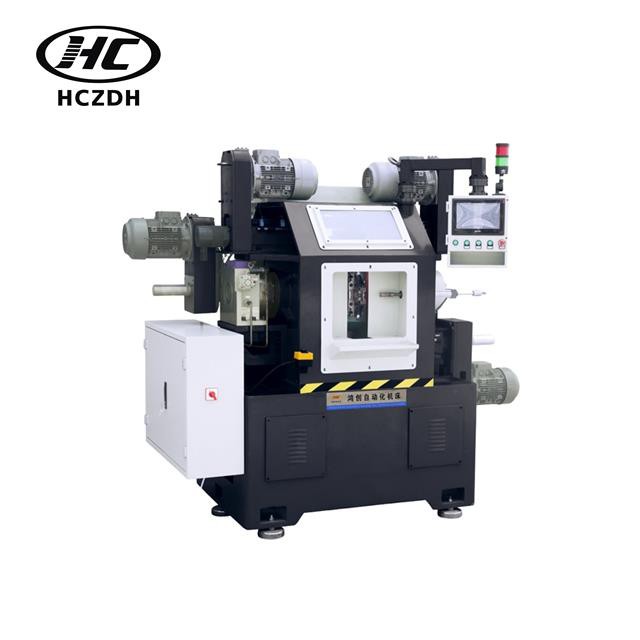
As a supplier of Valve Special Machines, we take great pride in the shock - resistance features of our products. Our machines are designed with a focus on structural integrity and advanced damping technologies.
For example, our High Quality And Fast Transfer Machine is built with a robust frame made of high - strength steel. This frame provides a stable foundation for the machine, effectively absorbing shocks generated during the transfer and machining processes. Additionally, it is equipped with hydraulic dampers at critical points to further reduce vibrations.
Our Air Condition Globe Valve Body Special Machine incorporates precision - machined components and rubber isolators. The precision machining ensures a perfect fit between parts, while the rubber isolators act as shock absorbers, protecting the machine from external disturbances.
The Automatic Bonnet Rotary Transfer Special Machine features a unique damping system that combines viscoelastic materials and spring - based isolators. This combination effectively reduces the impact of shocks during the rotary transfer process, allowing for smooth and accurate machining of valve bonnets.
Measuring the Shock - Resistance of Valve Special Machines
To ensure the shock - resistance of our Valve Special Machines, we employ a variety of testing methods. One common approach is to use accelerometers to measure the vibrations and shocks experienced by the machine during operation. By analyzing the acceleration data, we can identify any potential issues and make necessary adjustments to improve the machine's shock - resistance.
Another method is to conduct simulated shock tests. In these tests, the machine is subjected to controlled shocks similar to those it might encounter in a real - world manufacturing environment. By monitoring the machine's response, we can evaluate its ability to withstand shocks and make design improvements if needed.
The Future of Shock - Resistance in Valve Special Machines
As the demand for high - quality valves continues to grow, the importance of shock - resistance in Valve Special Machines will only increase. In the future, we can expect to see further advancements in shock - absorption technologies. For example, the development of smart damping systems that can automatically adjust to different shock levels based on real - time sensor data.
Moreover, with the integration of Industry 4.0 technologies, Valve Special Machines will be able to collect and analyze more data about their shock - resistance performance. This data can be used to optimize machine operation, predict maintenance needs, and improve overall manufacturing efficiency.
Conclusion
The shock - resistance of Valve Special Machines is a crucial aspect that directly impacts the quality, efficiency, and cost - effectiveness of valve manufacturing. As a supplier, we are committed to providing machines with excellent shock - resistance features through innovative design, advanced damping technologies, and strict quality control.
If you are in the market for Valve Special Machines and are looking for reliable solutions with high shock - resistance, we invite you to contact us for a detailed discussion. Our team of experts is ready to assist you in finding the most suitable machine for your specific manufacturing needs. Let's work together to enhance your production capabilities and achieve greater success in the valve manufacturing industry.
References
- Smith, J. (2018). Advanced Manufacturing Technologies for Valve Production. Industrial Press.
- Johnson, A. (2020). Vibration Analysis and Damping in Machine Tools. Elsevier.
- Brown, C. (2019). Structural Design Considerations for High - Performance Machines. Springer.