

What are the vibration levels of a ball machine?
Hey there! As a supplier of ball machines, I often get asked about the vibration levels of these machines. It's a crucial aspect that can significantly impact the performance, lifespan, and overall user experience. So, let's dive into what the vibration levels of a ball machine are all about.
Understanding Vibration in Ball Machines
First off, what exactly is vibration in the context of a ball machine? Vibration is essentially the rapid back - and - forth movement of the machine parts. In a ball machine, this can occur due to various factors. The motor is one of the main culprits. When the motor rotates, it creates mechanical forces that can cause the machine to vibrate. The way the balls are ejected from the machine can also contribute to vibration. As the balls are propelled out, there's a reaction force that can make the machine shake.
The level of vibration in a ball machine is measured in terms of amplitude and frequency. Amplitude refers to the maximum displacement of the vibrating part from its equilibrium position. In simpler terms, it's how far the machine moves when it vibrates. Frequency, on the other hand, is the number of vibrations that occur in a given time period, usually measured in Hertz (Hz).
Why Vibration Levels Matter
Now, you might be wondering why vibration levels are such a big deal. Well, excessive vibration can have several negative effects. For starters, it can reduce the accuracy of the ball machine. If the machine is vibrating too much, it becomes difficult to control the direction and speed of the balls. This is a major problem, especially for users who rely on the ball machine for training purposes, like tennis players or baseball players.
High vibration levels can also lead to increased wear and tear on the machine. The constant shaking can loosen the internal components, causing parts to break down more quickly. This means more frequent repairs and replacements, which can be costly in the long run. Additionally, excessive vibration can be a safety hazard. It can cause the machine to move around on its surface, potentially tipping over and causing injury.
Factors Affecting Vibration Levels
There are several factors that can affect the vibration levels of a ball machine. One of the most important is the quality of the motor. A high - quality motor is designed to run smoothly and with minimal vibration. Cheaper motors, on the other hand, may not be as well - balanced, leading to more vibration.
The design of the ball machine also plays a role. Machines with a solid and stable base are less likely to vibrate compared to those with a flimsy or poorly designed base. The way the balls are fed into the machine can also impact vibration. If the balls are not fed evenly, it can cause uneven forces and increase vibration.
Another factor is the speed at which the machine operates. Generally, the higher the speed, the more vibration the machine will produce. This is because at higher speeds, the mechanical forces acting on the machine are greater.
Measuring Vibration Levels
So, how do we measure the vibration levels of a ball machine? There are several tools available for this purpose. One common method is to use a vibration meter. This device can measure both the amplitude and frequency of the vibration. It works by detecting the movement of the machine and converting it into electrical signals that can be analyzed.
Some ball machines also come with built - in sensors that can monitor vibration levels. These sensors can provide real - time data on the machine's vibration, allowing users to take action if the levels get too high.
Controlling Vibration Levels
As a ball machine supplier, we take vibration levels very seriously. We use high - quality motors in our machines to ensure smooth operation. Our machines are also designed with a solid base to minimize vibration. Additionally, we have implemented advanced ball - feeding systems that ensure the balls are fed evenly, reducing the chances of uneven forces and vibration.
If you already own a ball machine and are experiencing high vibration levels, there are a few things you can do. First, make sure the machine is placed on a flat and stable surface. An uneven surface can cause the machine to vibrate more. You can also check the internal components of the machine to see if any parts are loose or damaged. Tightening loose screws or replacing damaged parts can often reduce vibration.
Comparing Different Ball Machines
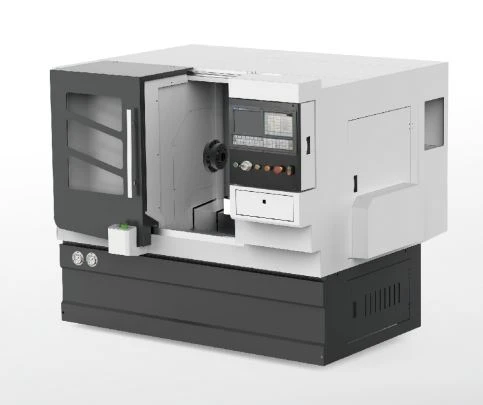
When it comes to choosing a ball machine, it's important to compare the vibration levels of different models. Some machines are specifically designed to have low vibration levels. For example, our Low Rail Inclined Bed Turret CNC Machine is engineered to minimize vibration, providing a more stable and accurate performance.
Our Mini Lathe Machine is another great option. Despite its small size, it has been designed with vibration control in mind, making it a reliable choice for users who need a compact ball machine.
The Totally Enclosed Guide Slant Bed Cnc Lathe Machine Jd32p - l is also known for its low vibration levels. Its advanced design and high - quality components ensure smooth operation and minimal shaking.
Conclusion
In conclusion, vibration levels are an important aspect of a ball machine. They can affect the accuracy, lifespan, and safety of the machine. As a supplier, we are committed to providing ball machines with low vibration levels. We use high - quality materials and advanced design techniques to ensure that our machines operate smoothly and reliably.
If you're in the market for a ball machine, I encourage you to consider the vibration levels of different models. And if you have any questions or would like to discuss your specific needs, feel free to reach out. We're here to help you find the perfect ball machine for your requirements.

References
- Engineering textbooks on mechanical vibrations
- Manufacturer's specifications for ball machines